
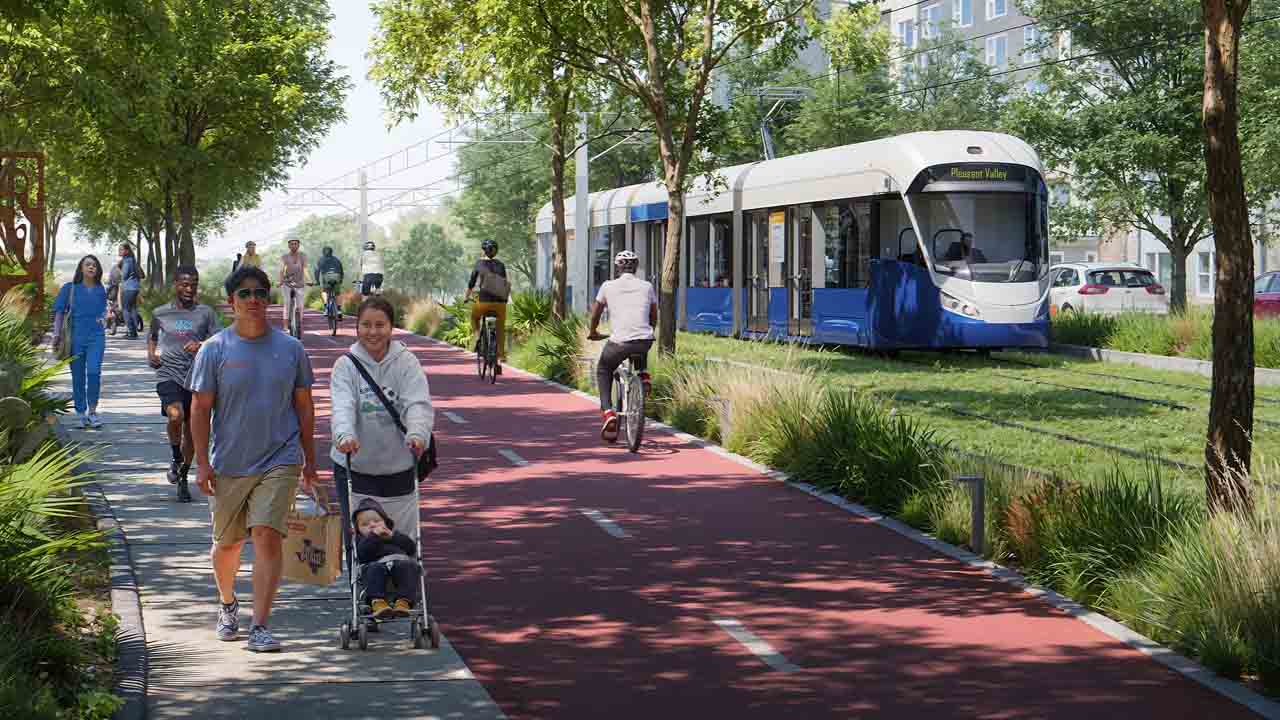
Austin’s long-anticipated light rail project has hit an important milestone, with the Austin Transit Partnership choosing a strong construction joint venture to take on a key piece of the work. The team led by Kiewit Building Group, alongside Austin Commercial, has been selected to build the system’s operations and maintenance facility, pushing the massive project another step closer to reality.
A Faster-Than-Usual Selection Process
The procurement process wrapped up in about a year, which is notably quick for large infrastructure projects that often take much longer to finalize. The Austin Transit Partnership (ATP), the organization managing the city’s transit overhaul, pointed out that moving this quickly can help limit common megaproject issues like budget overruns and schedule delays.
This contract is part of a larger transit effort estimated to cost between $6.8 billion and $7.1 billion, based on ATP’s January 2025 financial projections. Funding will come from a mix of local tax revenue, mainly from the voter-approved Proposition A, and expected federal support, helping keep the project financially stable while maintaining progress.
A Central Hub for the Rail Network
The new operations and maintenance facility will play a crucial role in Austin’s future light rail system. It will act as the main hub for storing, servicing, and dispatching the network’s all-electric trains.
When finished, the rail system will cover nearly 10 miles and feature 15 stations placed throughout the city. It’s also being designed with future growth in mind, making it easier to expand as Austin continues to grow and demand for public transit increases.
About 10 subcontractors are expected to be involved during the design phase, with roughly half based in the Austin area. This local involvement supports the regional economy and aligns with ATP’s focus on community-centered development.
Early Work Already in Motion
After receiving board approval, work on the facility got underway right away. Initial efforts include design development, site investigations, coordinating utilities, and securing permits, key steps that will guide how the project unfolds in the coming years.
This early momentum reflects ATP’s broader approach of keeping all parts of the project moving steadily to avoid delays.
A Network of Key Partners
The operations facility is just one element of a much larger plan. In December 2024, ATP selected the LINC Austin joint venture as its Phase 1 delivery partner, bringing together firms like AECOM, Parsons, STV, Turner & Townsend, Ardmore Roderick, and CAS Consulting.
Earlier in the year, ATP also awarded a $60 million preconstruction contract to Austin Rail Constructors, a partnership between Stacy Witbeck and Sundt Construction, tasked with early planning work for the rail corridor.
Reshaping Transportation in Austin
This light rail project marks a major shift for Austin, a fast-growing city facing increasing traffic and transportation challenges. By introducing a modern electric rail system, the city hopes to offer a cleaner, more efficient alternative to car travel.
Beyond improving mobility, the project is expected to boost economic activity, create jobs, and improve how people move around the city. The use of local contractors and phased development shows a clear effort to balance speed with community involvement and long-term sustainability.
With key partnerships in place and early work already underway, Austin’s vision for a modern rail system is steadily becoming a reality, ushering in a new chapter for public transportation in one of the nation’s fastest-growing cities.
