In a major relief for Delhi’s public transport system, Chief Minister Rekha Gupta on Sunday, February 8, announced a ₹1,200 crore financial grant for the Delhi Transport Corporation (DTC), addressing long-pending operational and employee-related concerns while also laying the groundwork for a technology-driven overhaul of road safety across the Capital.
According to officials, the Finance Department has cleared the full allocation, with the bulk of the funds ₹1,100 crore earmarked to meet salary payments, pensions and other statutory dues of DTC employees and retirees. The move is expected to stabilise the cash-strapped transport body, which has been struggling to meet routine financial obligations in recent years.
The remaining ₹100 crore has been approved by the Cabinet for the rollout of an Advanced Traffic System (ATS), a technology-led initiative aimed at improving traffic regulation, strengthening enforcement and reducing road accidents in Delhi.
The ATS project will bring together multiple smart traffic management tools on a single digital platform. These include high-definition video surveillance, electronic enforcement systems, intelligent traffic regulation mechanisms and faster coordination for emergency response. Officials said the integrated approach is designed to address long-standing gaps in monitoring, enforcement and response time on Delhi’s congested roads.
A key feature of the ATS will be the establishment of a central command and control centre. This facility will function as a real-time monitoring hub, allowing authorities to track traffic conditions across major corridors, intersections and accident-prone zones. From this centre, officials will be able to respond quickly to road accidents, manage traffic disruptions caused by fog, vehicle breakdowns or stalled buses, and coordinate field teams during emergencies.
The system is also expected to significantly reduce response times by enabling faster dispatch of on-ground assistance, ambulances and emergency services. By combining live video feeds with automated alerts, enforcement agencies will be able to identify incidents and violations more swiftly than under existing manual systems.
Electronic enforcement tools and advanced surveillance equipment will further strengthen compliance by enabling quicker detection of speeding, lane violations and other traffic offences. Authorities believe this will act as a deterrent while also improving accountability and transparency in traffic management.
Beyond traffic safety, the broader grant package will also support the development of commercial electric vehicle charging infrastructure in Delhi. This initiative will be implemented under the Scheme for Special Assistance to States for Capital Investment (SASCI) and aligns with the government’s parallel push towards cleaner and more sustainable urban mobility.
Officials said the investment in EV charging infrastructure is aimed at supporting the gradual transition to electric public and commercial transport, reducing emissions and easing dependence on fossil fuels in the long term.
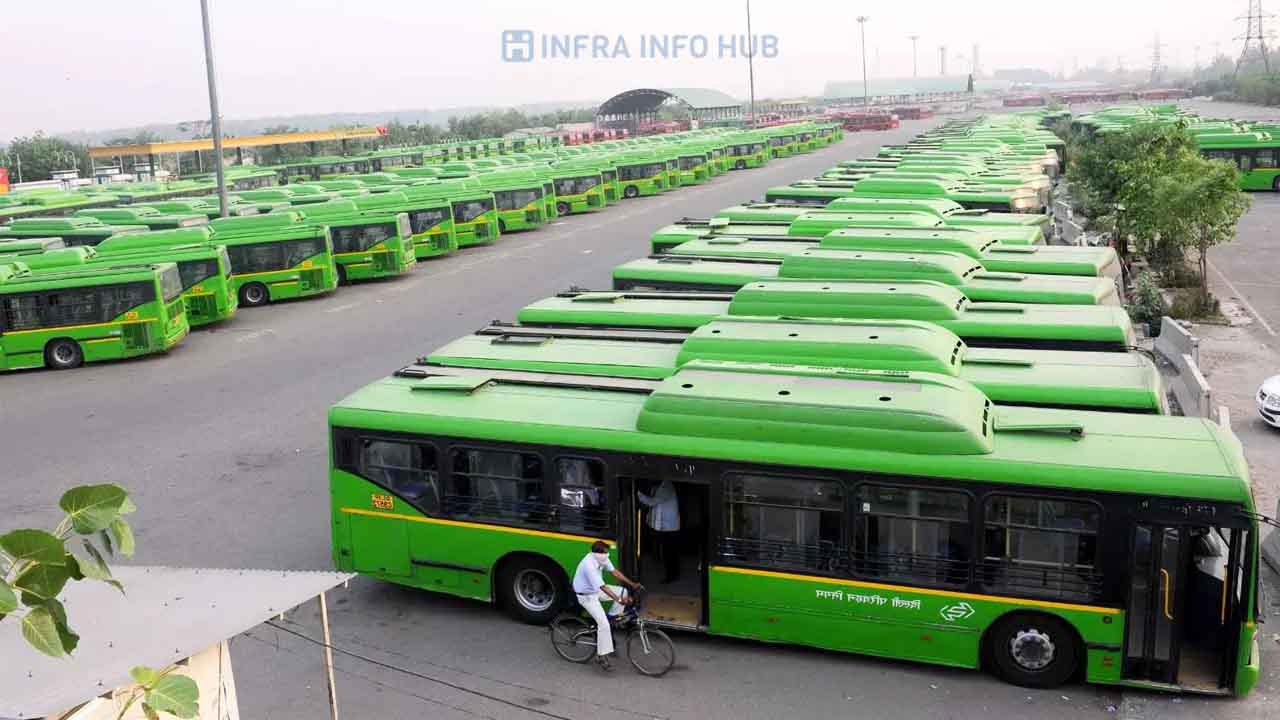
The focus on technological intervention comes against the backdrop of rising concern over bus-related road accidents in the city. According to Delhi government data, DTC and cluster buses were involved in nearly 150 road accidents during the 2024–25 period, including 41 fatal incidents.
Of these accidents, DTC buses accounted for 97 cases, while cluster buses were linked to 50. Several official reports have attributed these crashes to factors such as overspeeding, poor lane discipline, weak enforcement mechanisms and delays in responding to incidents once they occur.
The new Advanced Traffic System is expected to directly address these shortcomings by improving real-time monitoring, strengthening enforcement and enabling faster emergency response. Government officials believe that once fully operational, the system could play a crucial role in reducing accidents, saving lives and restoring public confidence in Delhi’s bus-based transport network.
With the dual focus on financial stability for DTC and smarter traffic management, the latest Cabinet decisions mark a significant step in the Delhi government’s broader effort to modernise urban transport and improve road safety across the Capital.