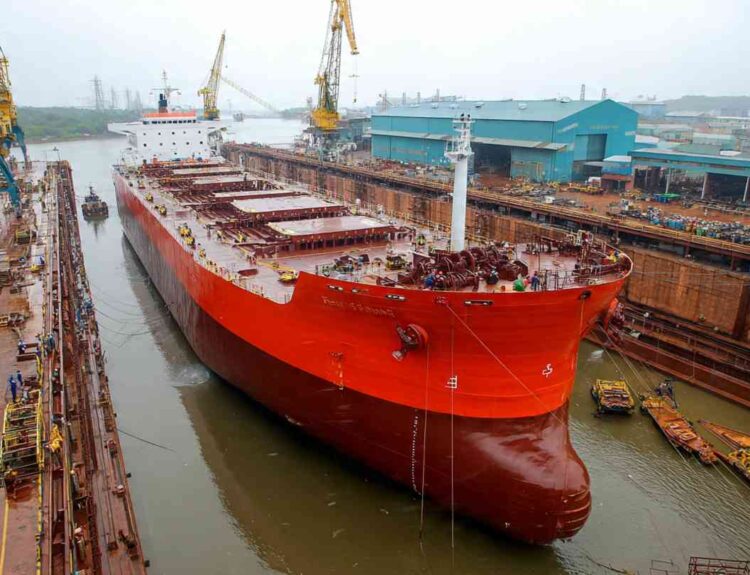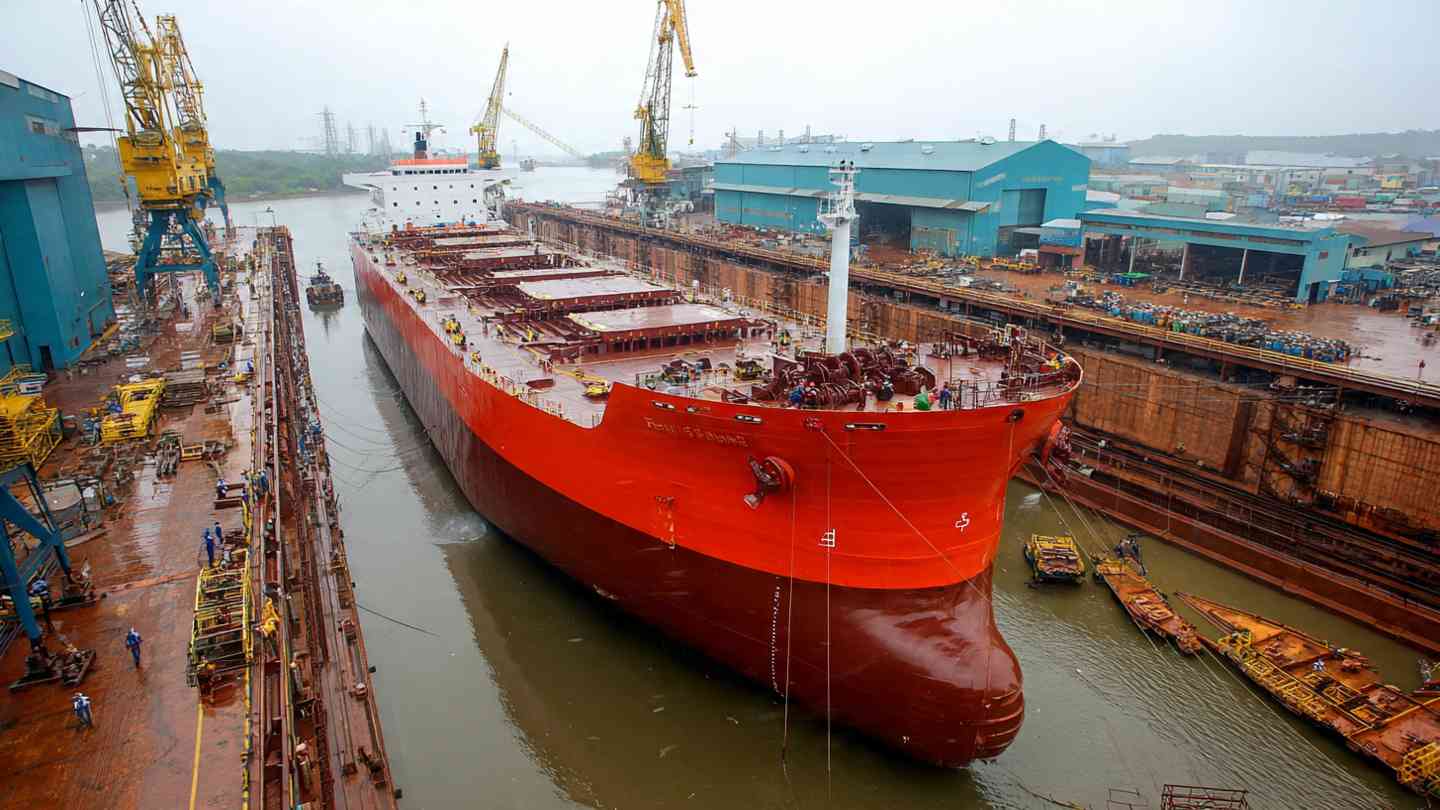
Kerala is preparing to add a second major shipbuilding hub to its coastline this time in the Malabar region. A large shipbuilding yard is set to come up at Ponnani Port in Malappuram district, positioning the port as a new industrial anchor after Kochi and pushing the state’s maritime economy beyond traditional fisheries and coastal trade.
Developed under a Public–Private Partnership (PPP) model, the proposed facility will be built on around 29 acres of coastal land on the western side of the Ponnani Fishing Harbour, under the Kerala Maritime Board. The project is being described as a phased investment plan that could scale from smaller vessels toward higher-capacity shipbuilding and allied marine manufacturing alongside a dedicated training ecosystem to support skilled employment.
In this article, we lay out the project’s planned structure, the economic logic behind Ponnani as a shipbuilding site, what “phased investment” can practically mean in shipyard development, and how this initiative could reshape Malabar’s industrial trajectory over the next decade.
Table of Contents
- 1 What Is the Ponnani Shipyard Project?
- 2 Why Ponnani Port? Strategic Logic Behind the Location
- 3 Understanding the ₹1,200 Crore “Phased Investment” Plan
- 4 Kerala’s Shipbuilding Landscape: Ponnani After Kochi
- 5 PPP Model for Shipbuilding Yard: Why It’s Being Used
- 6 Shipbuilding Training Institute: The Real “Multiplier” Behind the Project
- 7 What This Means for Malabar: Jobs, MSMEs, and Regional Growth
- 8 Expected Timeline Signals and What to Watch
- 9 FAQs: Ponnani Port Shipyard Project
- 10 Final Take: Why the Ponnani Shipyard Could Become a Game-Changer for Kerala’s Maritime Economy
What Is the Ponnani Shipyard Project?
The upcoming project is widely being positioned as Kerala’s second major shipyard after Kochi, with the Ponnani location expected to unlock large-scale maritime industrial development in northern Kerala.
Key known project markers include:
Location: Ponnani Port / Ponnani Harbour area, Malappuram district (Malabar region)
Land Area: ~29 acres on the western side of Ponnani Fishing Harbour
Governance: Kerala Maritime Board jurisdiction
Model: PPP (Public–Private Partnership)
Investment: ₹1,200 crore planned “in phases.”
Add-ons: A shipbuilding-related training institute, plus a plan to start cargo movement after the shipyard becomes operational
This isn’t being presented as a single-step mega facility. Instead, the project signals incremental capacity building and a realistic approach in shipbuilding, where dry docks, fabrication halls, heavy-lift equipment, logistics connectivity, and a certified workforce must mature together.
Why Ponnani Port? Strategic Logic Behind the Location
1) Malabar’s Long-Standing Need for Industrial Anchors
For years, Kerala’s large maritime-industrial concentration has leaned southward, with Kochi operating as the primary shipbuilding and repair nucleus. A shipyard at Ponnani introduces a counterbalance, creating a northern industrial magnet that can stimulate:
ancillary workshops and subcontractors
steel fabrication clusters
marine electronics and components supply
port-linked warehousing and logistics services
regional job creation outside the traditional urban hubs
In other words, Ponnani could become a “marine manufacturing corridor node” for Malabar.
2) Existing Coastal Ecosystem and Fishing Harbour Synergies
A shipbuilding yard adjacent to an active fishing harbour naturally unlocks demand for:
mechanised fishing vessels
FRP boats and coastal craft upgrades
engine replacement and overhaul services
routine hull repair and maintenance cycles
safety retrofits aligned with evolving maritime compliance norms
This reduces the “market creation” burden because baseline demand already exists.
3) Port-Led Cargo Potential
Project reporting indicates that cargo handling is expected to begin once the shipyard becomes operational. That combination matters. Shipyards are rarely stand-alone; they perform best when tied into:
Inbound steel and machinery supply chains
outbound equipment and fabricated modules movement
coastal shipping and industrial cargo flows
This makes Ponnani’s shipyard concept not just manufacturing, but port-led industrialisation.
Understanding the ₹1,200 Crore “Phased Investment” Plan
What phased shipyard development typically involves
The phrase “investment planned in phases” usually signals a build-out pattern like:
Phase 1: Baseline shipbuilding + repair
slipways / basic yard launch infrastructure
initial workshops: cutting, bending, welding
limited-capacity dry docking or repair berths
utilities: power, compressed air, firefighting systems
essential lifting equipment: cranes, winches
Compliance setup: environmental safeguards and waste handling
Phase 2: Capacity expansion + fabrication scale-up
expanded fabrication halls
advanced hull-block construction facilities
upgraded heavy-lift cranes
expanded workforce and certification systems
strengthening supply base & subcontracting ecosystem
Phase 3: Larger vessel capability + marine industrial park effects
heavier docks / longer berths
integrated module fabrication
marine equipment manufacturing ecosystem
stronger cargo integration and coastal shipping throughput
This is precisely how many successful shipbuilding hubs develop: start narrow, scale deep, build market confidence, and progressively move to higher complexity.
Kerala’s Shipbuilding Landscape: Ponnani After Kochi
Kerala already has an established shipbuilding identity through Cochin Shipyard, which is nationally significant and globally connected through orders and repair activity.
Adding Ponnani does not compete with Kochi in the near term; it expands Kerala’s capacity in a complementary way:
Kochi: large-scale, established industrial ecosystem, higher complexity projects
Ponnani: phased development, Malabar-focused industrial uplift, coastal craft + scaling pathway
This dual-centre model mirrors how shipbuilding regions evolve globally: one mature hub and one growth hub, both feeding the same wider maritime economy.
PPP Model for Shipbuilding Yard: Why It’s Being Used
A PPP shipyard model generally indicates the government wants to:
retain strategic oversight of port/harbour land
accelerate construction and operations via private expertise
reduce full fiscal burden of building heavy marine infrastructure
improve operational discipline through performance-based contracting
pull in a private player with market linkages (orders, supply chain, technology)
The reporting also indicates the tender process is complete and the agreement signing could happen soon, signalling that Kerala intends to move fast from announcement to execution.
Shipbuilding Training Institute: The Real “Multiplier” Behind the Project
Shipbuilding is labour- and skill-intensive. Without a stable skill pipeline, shipyards face:
inconsistent welding quality
Rework and cost escalation
schedule slippage
compliance risks
constrained scaling capacity
This is why the planned shipbuilding-related training institute is more than a side note. It is likely to become the region’s workforce engine, producing:
coded welders and fabricators
fitters and pipe assemblers
marine electricians
hull technicians
QA/QC inspectors
safety supervisors
A training institute tied to a working shipyard also improves employability: apprentices train on real processes, not simulated labs.
What This Means for Malabar: Jobs, MSMEs, and Regional Growth
1) Direct and indirect employment
Shipbuilding creates layered employment:
direct: yard workforce, engineering teams, quality control, procurement, operations
indirect: transport, fabrication, subcontracting, vendors, machining, painting, accommodation, services
Even in a modest first phase, the employment ripple is substantial compared to many conventional projects.
2) MSME manufacturing ecosystem
Shipyards naturally attract and incubate:
steel processing units
machining workshops
marine fittings suppliers
rubber and gasket manufacturing
hydraulic/electrical component vendors
protective coatings and paint supply chains
That leads to what we can call industrial thickening, a region becomes economically denser and more resilient.
3) Long-term industrial identity for Ponnani
A working shipyard is not a one-time construction boost. It is an operational economy, where each vessel order or repair cycle sustains revenue, employment, procurement, and learning.
Expected Timeline Signals and What to Watch
Based on public reporting:
The tender process is completed
PPP partner agreement signing expected soon
The yard will be built and scaled in phases
Cargo handling is expected to begin after the shipyard becomes operational
Practical indicators to track in the coming months:
signing date of the PPP agreement
phase-wise project scope disclosures
environmental/CRZ compliance milestones (if released)
training institute location, affiliation, and intake plans
First phase construction tender packages (civil + marine structures)
procurement of cranes, slipway systems, workshops, and utilities
FAQs: Ponnani Port Shipyard Project
Will Ponnani become Kerala’s second shipyard after Kochi?
Yes. Reporting explicitly describes the Ponnani facility as Kerala’s second shipyard after Kochi, being developed under a PPP model.
How much land is planned for the shipbuilding yard?
Around 29 acres of coastal land west of the Ponnani Fishing Harbour has been identified for the project.
What is the planned investment?
The figure cited is ₹1,200 crore, to be invested in phases as the yard scales.
Will there be a training institute?
Yes. A shipbuilding-related training institute is also part of the plan, supporting manpower development.
Final Take: Why the Ponnani Shipyard Could Become a Game-Changer for Kerala’s Maritime Economy
The Ponnani Port shipbuilding yard is a strategic industrial move with effects that extend beyond infrastructure headlines. With PPP execution, phased ₹1,200 crore investment, 29-acre coastal development, and an integrated training institute, Kerala is signalling intent to create a second shipbuilding pillar this time rooted in the Malabar region.
If executed with speed and industrial discipline, Ponnani can evolve from a local harbour economy into a scalable marine manufacturing ecosystem delivering jobs, MSME growth, coastal cargo movement, and a new long-term identity for northern Kerala’s coastline.