
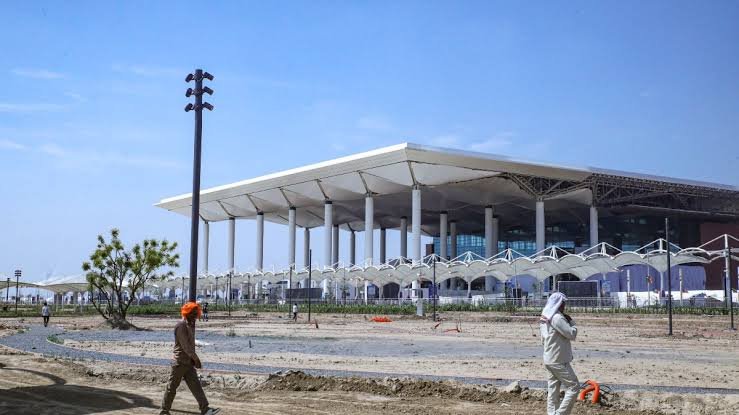
Noida International Airport in Jewar, Uttar Pradesh, delivered an impressive first full month of operations in July, but its Swiss operator says the road ahead could be bumpier than expected thanks to global geopolitical uncertainty rather than any issue with the airport itself.
A Strong Start Since June Launch
The airport, which began commercial flights on June 15, 2026, saw activity multiply almost overnight. In its debut month of June, it handled just 204 flights and around 25,000 passengers. By July, those numbers had jumped to 1,044 flights and roughly 77,000 passengers, a more than fivefold increase in flight movements and a threefold rise in passenger traffic in a single month.
That kind of ramp-up would typically be cause for unreserved optimism. But Zurich Airport International AG, the operator behind the project, is tempering expectations for what comes next.
Operator Warns of a Slower Climb
In its investor presentation covering the first half of 2026, Zurich Airport International said it now expects growth to slow in the near term. The company pointed to a difficult geopolitical backdrop as the main reason, noting that near-term performance will likely stay volatile as a result.
Importantly, the caution appears to be about external conditions rather than the airport’s own performance or demand fundamentals. The operator was careful to separate short-term turbulence from its long-term view, expressing strong confidence in the growth potential and fundamentals of India’s aviation market over time.
That long-term optimism comes with concrete plans: Zurich Airport International expects the airport’s route network to keep expanding, and it is preparing to add international flights as connectivity grows. In other words, the current slowdown in expected growth is being framed as a pause, not a reversal.
The Financial Picture So Far
Being a brand-new airport, Noida International is still firmly in its investment phase, and the early financials reflect that. For the first half of 2026, the airport generated revenue of CHF 2.5 million (roughly ₹23-24 crore), while operating expenses came in higher at CHF 4.9 million. That left the airport with an EBITDA loss earnings before interest, taxes, depreciation and amortisation of CHF 2.4 million for the period.
Such losses aren’t unusual for a newly launched airport still building its passenger base, route network, and commercial revenue streams. Airports typically take years to move from ramp-up to profitability, especially large greenfield projects like this one.
A Gateway Airport With Big Ambitions
Noida International Airport has been designed to serve as a new aviation gateway for North India, easing pressure on Delhi’s Indira Gandhi International Airport while serving the broader National Capital Region and nearby districts of Uttar Pradesh.
The scale of the project reflects those ambitions. The airport’s first phase has an initial annual handling capacity of 12 million passengers, with total investment in this development phase estimated at CHF 750 million (approximately ₹7,000 crore). Yamuna International Airport Pvt Ltd (YIAPL), a wholly owned subsidiary of Zurich Airport International AG, is responsible for running day-to-day operations.
What This Means Going Forward
For now, the airport’s trajectory tells two stories at once. On one hand, the June-to-July numbers show genuine momentum: more airlines, more routes, and more passengers choosing Jewar as flights ramp up. On the other, the operator’s own caution signals that this growth curve may not stay as steep in the coming months, with global geopolitical developments acting as a wildcard that’s largely outside the airport’s control.
Much will depend on how international conditions evolve and how quickly airlines commit to new domestic and international routes out of Jewar. If the network expansion plans go ahead as outlined, Noida International Airport could still meaningfully change air travel patterns across North India, just possibly on a longer timeline than the explosive June-July growth might have suggested.
For travelers and industry watchers alike, the coming quarters will be a key test of whether this ambitious new airport can convert early momentum into sustained, steady growth.
