
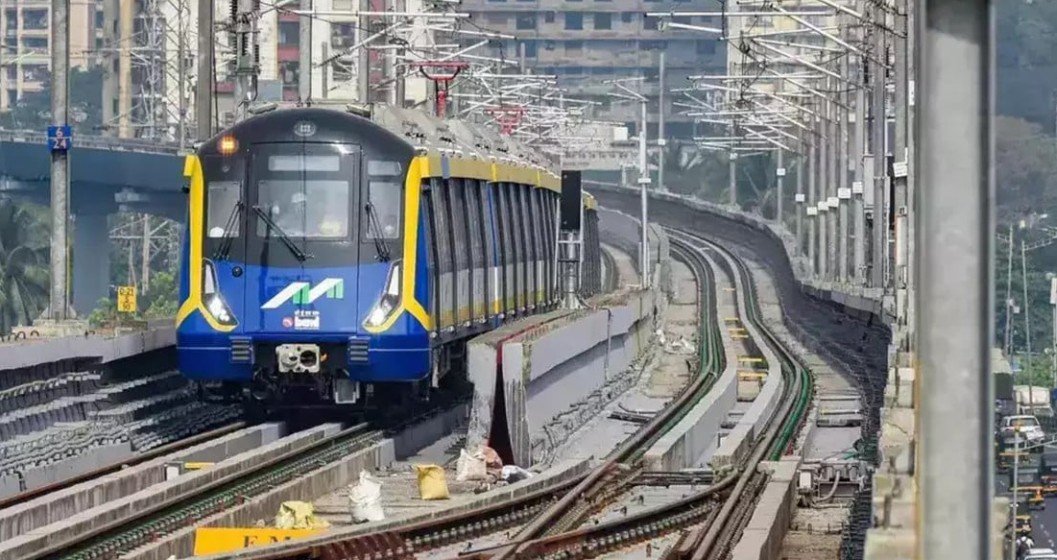
Thane’s much-awaited Metro 4 and 4A corridor has cleared another important milestone on its road to opening, with the Mumbai Metropolitan Region Development Authority (MMRDA) securing safety certification for the trains that will run on the first passenger stretch. The approval brings the project a step closer to finally welcoming commuters after years of construction.
What the Certification Covers
The newly secured clearance applies specifically to the rolling stock meant for the initial section of the corridor, a 10.5-km stretch running from Gaimukh to Cadbury Junction, comprising eight stations. This is the segment expected to open first to the public, making the certification a key checkpoint before any commercial launch can be considered.
With this approval in hand, MMRDA is now working through the remaining regulatory steps required before trains can actually start carrying passengers. While this clears a significant hurdle, a few more approvals still need to fall into place before doors open to the public.
Six Trains, One Temporary Depot
For this first phase of operations, six train rakes have been planned to run on the Gaimukh-Cadbury Junction stretch. Normally, a metro line of this scale would rely on its dedicated depot for stabling and maintenance, but Metro 4’s main depot is still under construction. To work around this, MMRDA has built a dedicated pit line at Gaimukh that will handle stabling, inspection, and routine maintenance duties until the permanent depot is ready.
The Gaimukh facility has been designed with two island platforms and four lines in total. Two of these lines are meant for regular passenger operations, while the remaining two are set aside specifically for servicing and handling the rakes, essentially functioning as a scaled-down maintenance hub until the full-scale depot comes online.
A Multi-Step Certification Journey
This rolling stock clearance is the latest in a series of approvals the project has worked through. It follows certification from the Research Designs and Standards Organisation (RDSO), which was granted in June, confirming that the trains met the required technical and safety standards.
That first-phase certification was formally issued on 2 June, capping off what officials describe as an extended approval process involving multiple agencies working in coordination. Large infrastructure projects like metro corridors typically require sign-off from several regulatory bodies before passenger service can begin, and Thane’s Metro 4 has been no exception.
The next major checkpoint now rests with the Commissioner of Metro Railway Safety (CMRS), whose officials have already inspected the Gaimukh pit line as part of the process. Final clearance from CMRS is still awaited, and this approval is typically one of the last major regulatory steps before a metro line can be opened to the public.
Trials Already Underway
Ahead of these certifications, MMRDA has already been running trial operations on a 4.4-km portion of the corridor, covering the Gaimukh, Govaniwada, Kasarvadavali, and Vijay Garden stretch. These trials are a standard part of the pre-launch process, allowing operators to test everything from train performance to signalling systems under real operating conditions before passengers are allowed on board.
During the certification process, the trains reportedly remained stationed on the elevated corridor for an extended period, reflecting the thoroughness of the inspection and evaluation process that precedes any metro line’s public launch.
The Bigger Corridor Picture
Once fully complete, Metro 4 will stretch 32.32 km from Wadala to Kasarvadavali, making it one of the more extensive metro corridors planned for the Mumbai Metropolitan Region. Running alongside it is the 2.88-km Metro 4A extension, which will connect Kasarvadavali to Gaimukh, effectively extending the line’s reach further into Thane.
The Gaimukh-Cadbury Junction stretch being certified now represents just the opening phase of this much larger network, but it’s a crucial one it will be the first segment to actually carry passengers and will set the tone for how the rest of the corridor’s rollout proceeds.
What Comes Next
With rolling stock certification now secured and CMRS inspections already underway, Thane residents may not have much longer to wait before the corridor becomes operational. For a region that has seen steadily worsening road congestion over the years, the opening of Metro 4’s first phase is expected to offer a much-needed alternative for daily commuters, even as the rest of the corridor continues taking shape in the background.
