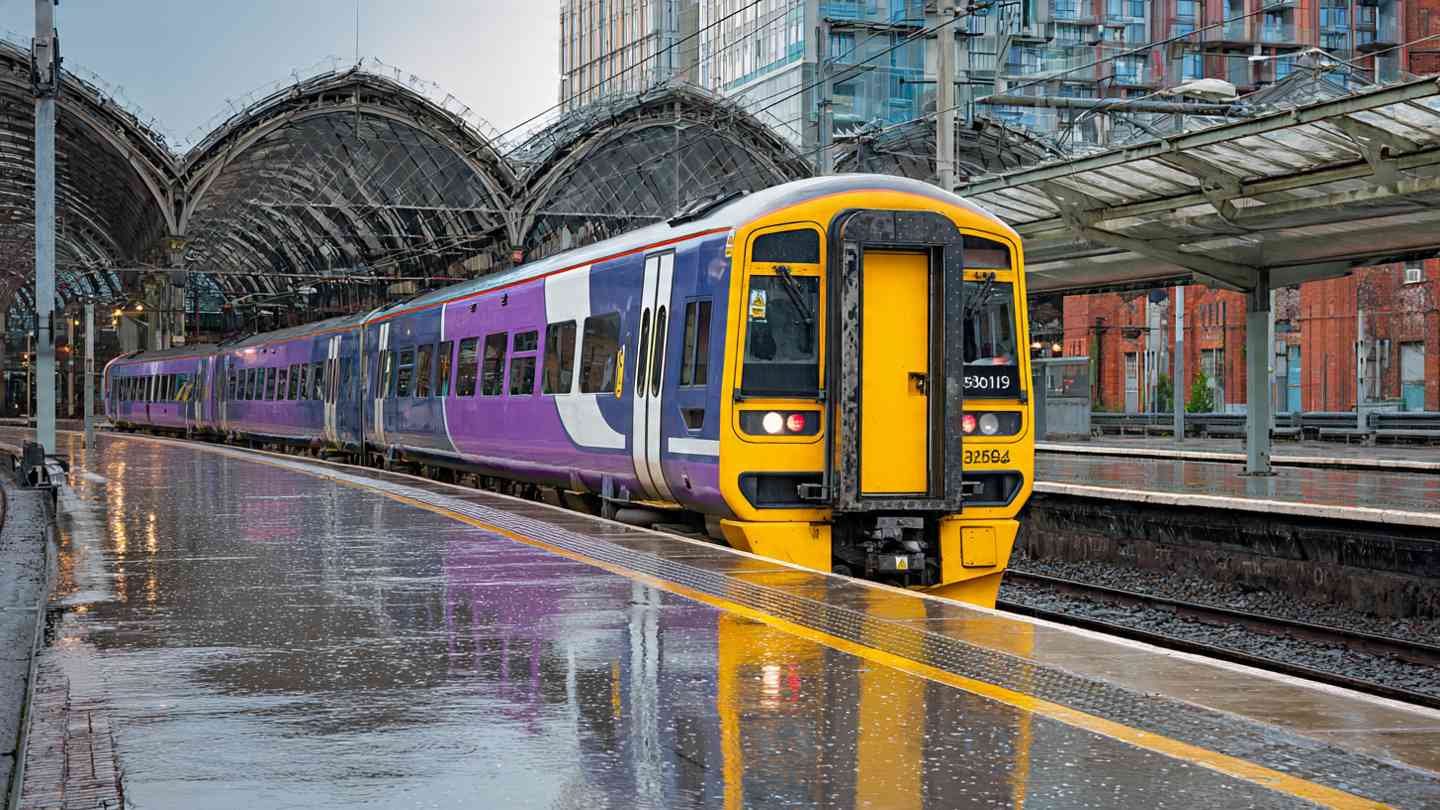
The UK Government has confirmed a multi-billion-pound rail investment programme for the North West of England, setting out plans to expand capacity, cut journey times, and strengthen city-to-city connectivity across the wider North. The programme will be delivered in partnership with Transport for the North (TfN) and Network Rail and is positioned as a core element of the Northern Powerhouse Rail (NPR) vision.
According to the Department for Transport, the investment aims to “unlock the North West’s economic potential” and boost living standards by improving regional transport links. Government estimates suggest that raising the productivity of the five largest cities to the national average could add up to £40 billion a year to the UK economy, with transport connectivity framed as a key lever for achieving that growth.
A flagship component of the programme is the confirmation of plans for a brand new rail line between Liverpool and Manchester, described as one of the most congested corridors in the region. The proposed route would run via new stations at Manchester Airport and Warrington Bank Quay Low Level, creating a direct link to the North’s main international gateway and improving access for commuters and business travellers.
The Government said the proposals are intended to form the backbone of a modernised northern rail network, improving links between major urban centres, including Liverpool, Manchester, Leeds, and surrounding cities. While the Liverpool–Manchester link is being presented as the headline project for the North West, the wider programme also includes upgrades across the Pennines to improve connectivity between Manchester and Yorkshire, including links to Leeds, Bradford, and Sheffield.
Internationally, the investment is being presented as part of a broader effort to rebalance the UK economy by addressing long-standing regional disparities in infrastructure spending. Reuters reported that the government is committing up to £45 billion towards the NPR initiative and associated upgrades, arguing that Victorian-era infrastructure constraints have held back productivity in northern England. The same reports indicate that the delivery plan will be rolled out across three phases, beginning with upgrades to existing corridors before major new build works progress later.
Funding and delivery will span multiple decades. Reporting on the programme has highlighted that most of the spending is expected to take place in the 2030s and 2040s, with the current parliamentary term focusing on early-stage development work such as design, planning, and project preparation. The Financial Times noted that around £1.1 billion is earmarked in the near term for design and development, while the broader investment is being treated as a funding cap designed to manage cost risk.
The announcement comes after years of changes to long-term rail planning in the North, including the scaling back of HS2’s northern leg under the previous government. In that context, the NPR programme is being promoted as the central strategic alternative for improving northern connectivity, with local and regional leaders urging rapid progress and clear delivery milestones.
Network Rail Infrastructure Ltd is expected to play a leading role in delivery, alongside TfN, with further design refinement and route development to follow. The Government’s position is that improved rail capacity is essential not only for faster passenger journeys, but also for freight movement, labour mobility, and new housing growth tied to upgraded transport corridors.