Tag: Expressway

  • Nagpur Vijayawada Expressway: Route, Progress, Benefits & Completion Timeline

    Nagpur Vijayawada Expressway: Route, Progress, Benefits & Completion Timeline

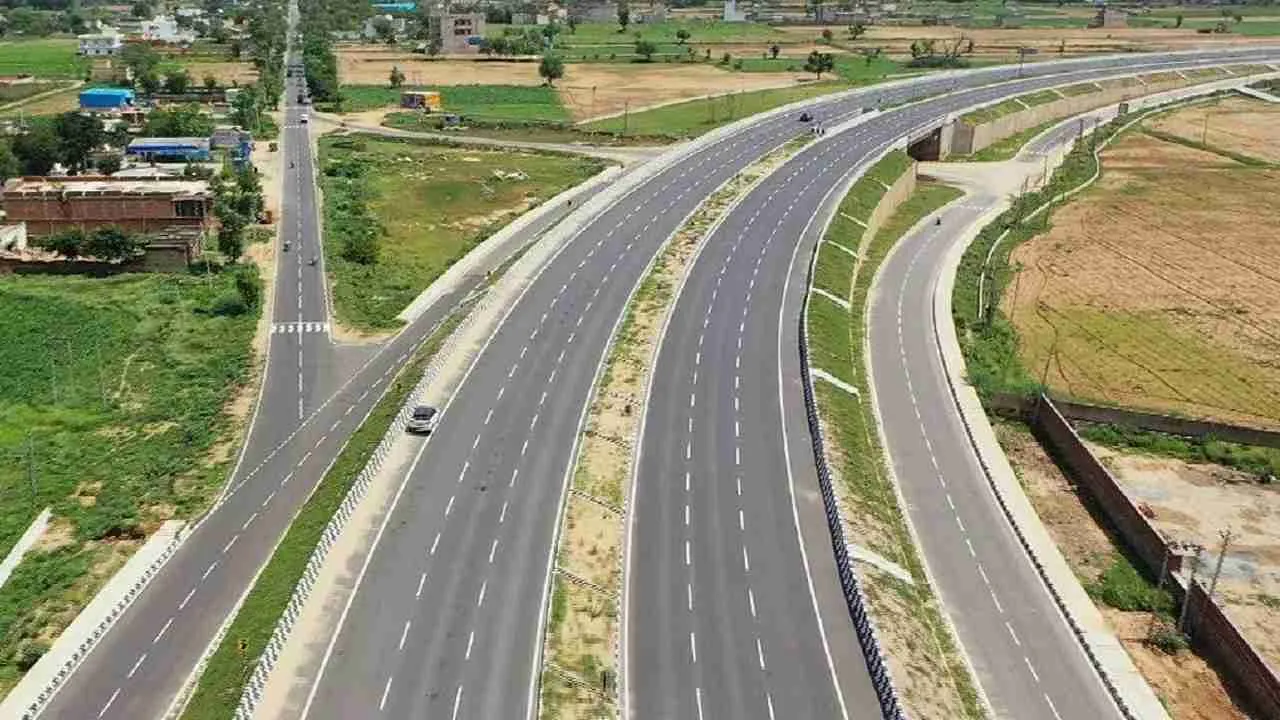
    Imagine a road connecting two vibrant cities, promising to reduce travel time, boost the economy, and enhance cultural diversity. The Nagpur Vijayawada Expressway is a transformational infrastructure project redefining connectivity in India. This article will explore its route, progress, benefits, and more.

    Nagpur Vijayawada Expressway Overview

    • Total Length: 577 Kilometers
    • Lanes:
    • Cost: ₹14,030 crore
    • Starting Point: Nagpur
    • Ending Point: Vijayawada
    • Completion time: 2027

    About Nagpur Vijayawada Expressway

    The Nagpur Vijayawada Expressway is a 577 km long and four-lane, semi-access-controlled expressway that will pass through three states: Maharashtra, Telangana, and Andhra Pradesh. The Nagpur Vijayawada Expressway is an ambitious project under the Bharatmala Pariyojana, which aims to improve road connectivity across the country. This expressway is a high-speed corridor that facilitates faster movement of goods and people between central and southern India.

    Historical Background

    There has long been a need for a direct and efficient route between Nagpur and Vijayawada. Both cities are important hubs in their respective regions: Nagpur is the geographical center of India and a developed logistics hub, while Vijayawada is an important commercial center of Andhra Pradesh. This is the result of years of planning and advocacy for better infrastructure that promotes regional development.

    Nagpur Vijayawada Expressway Route

    Nagpur Vijayawada Expressway Route

    Starting Point: Nagpur

    The starting point of this expressway is Nagpur, often called the “Orange City” for its famous oranges. The city holds strategic importance due to its central location and being an important junction for several national highways and railways.

    Key Stops and Cities

    The road passes through several important cities and towns as it moves south, including:

    • Adilabad: known for its natural beauty and vast cultural heritage.
    • Nizamabad: A developed urban center with important historical places.
    • Karimnagar: An emerging city that is developing in agriculture and industry.

    Ending Point: Vijayawada

    The expressway ends at Vijayawada, a city located on the banks of the Krishna River. Vijayawada is an important economic and cultural center of Andhra Pradesh, famous for its busy markets, vibrant culture, and important historical places.

    Districts Covered by Nagpur Vijayawada Expressway

    • Maharashtra: Nagpur, Wardha, Chandrapur
    • Telangana: Komaram Bheem Asifabad, Mancherial, Peddapalli, Jayashankar Bhupalpally, Hanumakonda, Warangal, Mahabubabad, Khammam
    • Andhra Pradesh: Krishna

    Nagpur Vijayawada Expressway Progress

    Current Status

    The planning and initial construction phases have progressed considerably so far. Land acquisition is nearly complete and groundwork is well underway along many stretches of the route.

    Construction Phases

    The expressway construction has been divided into several phases to ensure proper work. While the first phase will focus on the stretches with the highest traffic demand, the other phases will cover the entire stretch.

    Challenges

    The project has faced many challenges, including land acquisition issues, environmental approvals, and the need to resettle affected communities. The project is moving ahead despite these hurdles due to the strong commitment of stakeholders.

    Project Completion Time

    The expressway is expected to be fully operational by 2027, but some sections may open earlier to ease traffic congestion and gradually improve connectivity.

    Nagpur Vijayawada Expressway Benefits

    • Economic Impact

    Expressways, which will reduce travel time and transportation costs, will become a major economic development. It will attract investments, boost trade, and create employment opportunities in both urban and rural areas.

    • Transportation Efficiency

    A high-speed Expressway corridor will improve the movement of goods and passengers. This will not only reduce travel time but will also reduce vehicle emissions, thereby protecting the environment.

    • Environmental Considerations

    The main goal of the project is environmental sustainability. Afforestation, wildlife crossings, and innovative drainage systems are being implemented to reduce environmental impact and save the local ecosystem.

    • Socio-cultural Benefits

    The expressway will promote cultural exchange and social integration and enhance connectivity between diverse regions. It will ease tourist travel, boost tourism, and preserve the cultural heritage of the places it connects to.

    Conclusion

    The Nagpur Vijayawada Expressway is not just a route; it is a symbol of unity and development. It promises to connect central and southern India more effectively, leading to economic growth, development of transport facilities, and development of socio-cultural ties. As the project progresses, its benefits will be felt far and wide, ushering in a new era in Indian infrastructure development.

    Recommended:

  • Jamnagar-Bhavnagar-Bharuch Expressway: Route, Map, Project Status and Latest Updates

    Jamnagar-Bhavnagar-Bharuch Expressway: Route, Map, Project Status and Latest Updates

    Gujarat is currently developing rapidly. No city or village in Gujarat will remain without development projects. Meanwhile, the Gujarat government is now paying more attention to road facilities. So, such projects are coming to Gujarat, which will make the whole of Saurashtra happy.

    Bharuch can be reached directly from Jamnagar in five hours because a 316 km direct expressway connecting Jamnagar to Bharuch has been built. In which a 30 km long sea bridge will be built.

    Jamnagar-Bhavnagar-Bharuch Expressway Overview

    • Length: 316 km
    • Cost: TBD
    • Lanes: 4-6
    • Starting Point: Jamnagar
    • Ending Point: Bharuch
    • Completion Year: 2027 (Expected)

    Jamnagar-Bhavnagar-Bharuch Expressway Route

    The Jamnagar-Bharuch Expressway starts from Jamnagar, then passes through Rajkot and connects the Bhavnagar. Then it passes through a 30 km long sea bridge in the Gulf of Khambhat and will connect Bharuch.

    Jamnagar-Bhavnagar-Bharuch Expressway Route

    Jamnagar-Bhavnagar-Bharuch Expressway Progress

    On June 26, 2024, the Union Ministry of Road and Transport announced bidding for the DPR (Detailed Project Report) of both projects in Gujarat. The last date for bidding was November 4. A total of fifteen consultancy firms have applied for both projects in Gujarat. Three companies have bid for the Bhavnagar-Bharuch Expressway and the Jamnagar-Rajkot-Bhavnagar Expressway. At present, technical analysis of all the bids is being done. The survey work will be awarded to the lowest bidder among the qualified bidders. The company has to prepare the DPR within 540 days.

    The company selected for the DPR (Detailed Project Report) will start work in mid-2025. It will collect all the details of this potential project, such as how the road will be built, where it will pass, how many bridges and underpasses will be built, what the design will be, and what type of technology will be used. How much government and private land will be acquired? It will also include road drainage, parking, landscaping, and environmental issues. The detailed project report is expected to be ready by the end of 2026. After this, tenders will be issued to award the contract for building the road. Then the real work of road construction will begin.

    Jamnagar-Bhavnagar-Bharuch Expressway Specifications

    Bharuch can be reached from Jamnagar by road in just five hours. There is a longer route from Saurashtra to Surat, so they will reach in just six hours. Bhavnagar will benefit the most in Saurashtra. Surat is currently 357 km away from Bhavnagar.

    By a new expressway and constructing a 30 km long sea bridge, one can reach Bharuch from Bhavnagar in just 1 hour. Also, the distance between Bhavnagar and Surat will be reduced by 243 km. It will take less than two hours to connect the two cities as their distance is just 114 km.

    This will be the longest bridge on the seashore, which will be another major attraction of the expressway. A 30 km long sea bridge was built from Bhavnagar to Bharuch. The 21.8 km long Atal Setu in Mumbai is the longest bridge in the country. The expressway will get the longest sea bridge in the country.

    Lakhs of liters of fuel and precious time of people will be saved. The distance from Surat to Jamnagar is 527 km. On the way, one has to go to Bagodra or Vadodara, but this expressway will reduce the 135 km distance. As the distance decreases, the distance from Rajkot to Surat will be reduced from about 436 km to 117 km will be reduce. The distance from Somnath to Vadodara is 627 km. The distance of 215 km will be reduced to just 412 km.

    Conclusion

    The Jamnagar-Bharuch Expressway is a key project under the Bharatmala Pariyojana that promises to transform the transportation system in Gujarat. The project will boost Gujarat’s economic potential, enhance connectivity, and reduce travel time. The expressway, expected to be completed by 2027, is a testament to India’s commitment to developing world-class infrastructure that will promote sustainable development.

    Recommended:

  • Eastern Peripheral Expressway (KGP Expressway) – Route, Map, Toll Charges and Latest Updates

    Eastern Peripheral Expressway (KGP Expressway) – Route, Map, Toll Charges and Latest Updates

    Prime Minister Narendra Modi inaugurated the Eastern Peripheral Expressway (EPE), also known as Kundli-Ghaziabad-Palwal Expressway, on May 27, 2018. This six-lane, 135 km access-controlled Expressway is a part of the larger peripheral expressway project. It has two Expressways: EPE (Eastern Peripheral Expressway)and WPE (Western Peripheral Expressway). These two expressways together form the largest ring road encircling Delhi, bringing Noida, Faridabad, and Ghaziabad close to the national capital.

    The Eastern Peripheral Expressway, built at Rs., is India’s first smart and green expressway. Eastern Peripheral Expressway connects Haryana and Uttar Pradesh through Ghaziabad and Palwal with a land acquisition cost of Rs 11,000 crore. Moreover, this country’s first solar-powered expressway has rainwater harvesting installed every 500 meters. The highway will also feature 36 national monuments and 40 fountains.

    Eastern Peripheral Expressway Overview

    • Total Length: 135 km
    • Lanes:
    • Cost: ₹11,000 crores
    • Starting Point: Kundli, Sonipat, Haryana
    • Ending Point: Dholagarh, Palwal, Haryana
    • Completion Date: 27 May 2018

    About Eastern Peripheral Expressway

    The Eastern Peripheral Expressway (EPE) or Kundli–Ghaziabad–Palwal Expressway (KGP Expressway) in India is six lanes wide and 135 km (84 mi) long. It passes through the states of Haryana and Uttar Pradesh. 

    The Western Peripheral Expressway starts from Sonipat, passes through Baghpat, Ghaziabad, and Noida districts in Uttar Pradesh and Faridabad district in Haryana, and connects to the Western Peripheral Expressway at Dholagarh in Palwal. 

    The Eastern Peripheral Expressway and the Western Peripheral Expressway together form the largest ring road around Delhi. In March 2006, the Eastern Peripheral Expressway was named National Expressway 2 (NE-2).

    The Eastern Peripheral Expressway connects Palwal, Gautam Buddha Nagar, Faridabad, and Ghaziabad signal-free. This will also divert around 2 lakh vehicles passing through the national capital to this bypass. According to government estimates, the traffic entering Delhi will reduce by 30 percent, which will ultimately help reduce the city’s pollution. The distance of the Eastern Peripheral Expressway is 135 km, and it was divided into six different contractors. 

    Eastern Peripheral Expressway Route

    Eastern Peripheral Expressway Route Map

    The Eastern Peripheral Expressway, designated as National Expressway-2 (NE-2), runs from Sonipat to Palwal and passes through Baghpat, Ghaziabad, Greater Noida in Uttar Pradesh, and Faridabad in Haryana. Connects Sonipat and Palwal through the Western Peripheral Expressway (WPE). It will connect NH-1 to the Western Peripheral Expressway at Kundli and NH-2 at Palwal. It will cross the Yamuna River and three more national highways. It will pass through Muradnagar on National Highway-58, Dasna on National Highway-24, and Bilakbarpur on National Highway-91.

    Eastern Peripheral Expressway Toll Charges 

    Toll charges on the Eastern Peripheral Expressway were revised on April 1, 2022. Toll rates on the Eastern Peripheral Expressway have been increased by the National Highways Authority of India (NHAI) from 10 percent to 50 percent. Now the toll from Dasna to Duhai will be Rs 10. Instead of Rs 15, the toll fee from Duhai to Mavi Kalan (Baghpat) has become Rs 50. The price for cars and light vehicles will be Rs 50 to Rs 55. The toll will be Rs 180 from Duhai to Chhajju and Rs 165 from Dasna.

    Eastern Peripheral Expressway Speed Limit

    The speed limit on the Eastern Peripheral Expressway is 100 km/h for commercial vehicles and 120 km/h for cars/jeeps. The Intelligent Transport System (ITS) was inaugurated by Union Minister Nitin Gadkari on December 22, 2022. ITS will help in traffic efficiency, managing infrastructure, giving passengers early warning of traffic problems, and reducing travel time. Gadkari said a proposal to change the speed limit on the expressway is also under consideration.

    Eastern Peripheral Expressway Specifications

    1. Patrolling vans are deployed every 25 km to prevent crime.
    2. There will also be ambulance vans every 25 km.
    3. Tolls on the 135-kilometre-long expressway are collected based on distance traveled rather than the entire length.
    4. The construction of the Peripheral expressway was completed in 500 days, which is a record in the region.
    5. To avoid disruption of traffic flow, the option of electronic toll collection (FASTag) has been created.
    6. 2.5 lakh trees have been planted along the expressway, which are watered through a drip irrigation system.
    7. Solar panels have been installed at different places on the expressway, which generate solar energy. Eight solar power plants with a combined capacity of 4,000 kilowatts (4 MW) have been built along the expressway.
    8. A two-meter-long cycling path has been built on both sides of the road.
    9. 33% of the expressway was built from ash from coal power stations, further reducing pollution.
    10. Provision to park overloaded vehicles, where they can dump parts of their cargo to meet the weight norms before plying on the expressway
    11. Cameras have been installed every two kilometers to monitor the speed. A challan will be issued for vehicles exceeding the speed limit at the toll plaza. The challan amount will be added to the total toll payment.
    12. It also includes an expressway Traffic Management System (HTMS) and an Intelligent Video Incident Detection System (VIDS).
    13. Replicas of many famous Indian monuments have also been installed along the expressway, such as India Gate, Hawa Mahal, Qutub Minar, Gujarat Carvings, Char Minar, and others.

    Conclusion

    The Eastern Peripheral Expressway will greatly help farmers, traders, residents of the NCR region, and the neighboring states of Uttar Pradesh and Uttarakhand by improving regional road connections. These initiatives will significantly improve local transport infrastructure, making it faster, more efficient, and less polluting, which will benefit the economy.

  • Amas Darbhanga Expressway – Route, Map, Cost, Progress, and Latest Updates

    Amas Darbhanga Expressway – Route, Map, Cost, Progress, and Latest Updates

    Preparations are going on in full swing for a big expressway in Bihar. The expressway will pass through eight districts of the state, including Aurangabad and Darbhanga, and reach Gaya. This expressway, which will run from Darbhanga to Gaya, will have four lanes. 

    Its construction will provide a lot of convenience to the people. Amas Darbhanga Expressway, which is about 189 km. It is long and will start soon. Land acquisition for this has started. Officials are acquiring land in Fatuha and Dhanarua of Patna. CO and other officers of both areas have met the farmers and asked them to involve them in this work.

    Amas Darbhanga Expressway Overview

    • Length: 189 km
    • Lanes: 4
    • Cost: ₹6,927 crores
    • Starting Point: Amas (Gaya district)
    • Ending Point: Bela Nawada (Darbhanga district)
    • Completion Year: 2024

    About the Amas Darbhanga Expressway

    The Amas Darbhanga Expressway is part of the Bharatmala project, will be 189 km long, and will be built by the National Highways Authority of India (NHAI). The Greenfield Expressway will mostly be a four-lane, HUNCH-controlled route. If the plan works out perfectly, Transport Minister Nitin Gadkari will inaugurate Bihar’s first dedicated expressway in 2024.

    The NH-119D expressway will effectively connect Amas village in the Gaya district and Bela Nawada village in the Darbhanga district. The planned route will be the main economic corridor of the region. Once completed, it is likely to bring many benefits to the city, such as more business, more employment opportunities, and better road connectivity.

    The basic objective of the scheme is that the distance between North and South Bihar will be reduced by about four hours. It will also pass through the center of Bihar, connecting the outskirts of Aurangabad, Gaya, Patna, and Darbhanga.

    NHAI said the expressway will use parts of the Patna Outer Ring Road and the 9.75 km long Kachchi Dargah-Bidupur Bridge projects. Both projects are currently in development. There are plans to extend the route north to Jaynagar on the Nepal border.

    SA Infrastructure Consultants Pty Ltd has started land acquisition work to prepare the Detailed Project Report (DPR).

    Officials said the work will be completed in four phases. There are plans to build a four-lane road by 2024. A tender for two phases of this four-package road has been issued. At the same time, the process of the other two packages is going on. With the completion of this work, it will be easier to travel between North Bihar and South Bihar. The difference will reduce to about four hours.

    Amas Darbhanga Expressway Route

    Amas Darbhanga Expressway Route

    The expressway will start from Amas, Aurangabad, which is strategically located on the Delhi-Kolkata NH-19. It will pass through seven districts before connecting with NH-27 at Nawada village in Darbhanga. These 7 districts are Patna, Nalanda, Arwal, Jehanabad, Vaishali, Samastipu, and Darbhanga.

    According to the information, the 189-kilometer-long expressway will start from Amas in Aurangabad. Later, it will go to Arwal, Jehanabad, Patna, Vaishali, Samastipur, and Darbhanga. Land acquisition work is going on continuously for this big project. It is being said that the National Highway Authority of India (NHAI) will build the expressway.

    Once completed, it will significantly improve connectivity and accessibility between Amas and Darbhanga. Tourism, agriculture, and industrial development in the region will get a boost when travel time is saved and there is smooth traffic flow. Land acquisition comes with some challenges, but collaboration with local communities will help in realizing this infrastructure priority. The Amas-Darbhanga Expressway has tremendous potential to accelerate the development process of the state.

    Amas Darbhanga Expressway Village List

    1. Amas
    2. Mathurapur
    3. Guraru
    4. Panchanpur
    5. Bela
    6. Ibrahimpur
    7. Okri
    8. Pabhera
    9. Ramnagar
    10. Sabalpur
    11. Chaksikandar
    12. Dabhaich
    13. Bahuara
    14. Shahpur Baghauni (Tajpur)
    15. Shiv Nandanpur (Burhi Gandak)
    16. Basudevpur
    17. Ramnagar (Laheriasarai)
    18. Bela
    19. Nawada (Darbhanga)

    Conclusion

    Farmers and local businesses, who contribute significantly to Bihar’s economy, will benefit from the Amas Darbhanga Expressway in a big way. This road route will provide a simple, quick, and efficient road connectivity for farmers and other local businesses to transport their crops to different locations, helping them sell more and earn better.

  • Bengaluru Vijayawada Expressway – Route, Map, Cost, Progress, Benefits and More

    Bengaluru Vijayawada Expressway – Route, Map, Cost, Progress, Benefits and More

    One of the most ambitious infrastructure projects currently underway in India is the Bengaluru Vijayawada Expressway. The expressway aims to significantly reduce travel time between Bengaluru, the capital of Karnataka, and Vijayawada, a major city in Andhra Pradesh. By linking two important economic and cultural hubs of South India, the expressway is set to bring a major change in the region’s connectivity and economic condition.

    Bengaluru Vijayawada Expressway Overview

    • Length: 518 km
    • Lanes: 6
    • Cost: 14,000 crores
    • Starting Point: Kodikonda, Sri Sathya Sai district, Andhra Pradesh
    • Ending Point: NH-44, Bengaluru, Karnataka
    • Completion Year: 2026/27

    About Bengaluru Vijayawada Expressway

    The Bengaluru–Vijayawada Expressway, also known as the Bengaluru-Kadapa-Vijayawada (BKV) Expressway or NH-544G, is 518 km (322 mi) long and is under construction between Bengaluru, the capital of Karnataka, and Vijayawada, the second largest city in Andhra Pradesh.

    The National Highways Authority of India (NHAI) is developing the expressway under the Bharatmala Pariyojana, a road development initiative that aims to improve road infrastructure across the country. The expressways will be an important part of the larger highways and expressway network that connects major cities, facilitates faster movement of goods and passengers, and boosts economic activity.

    Bengaluru Vijayawada Expressway Route

    The expressway will start from National Highway 44 (NH-44) to Bengaluru, connecting Kodikonda in the Sri Sathya Sai district of Andhra Pradesh. It will then end at Addanki in the Bapatla district of Andhra Pradesh, passing through the Rayalaseema region and the Podili Prakasam district. From there, it connects to NH-16, Vijayawada. The route will pass through the following Districts of Karnataka and Andhra Pradesh.

    Andhra Pradesh:

    1. Sri Sathya Sai district
    2. Kadapa district
    3. Nellore district
    4. Prakasam district
    5. Bapatla district
    6. Guntur district
    7. Krishna district
    8. NTR district

    Karnataka:

    1. Bengaluru Urban district
    2. Bengaluru Rural district
    3. Chikkaballapur district

    Bengaluru-Vijayawada Expressway Route

    Bengaluru Vijayawada Expressway Progress

    The expressway is being constructed by the National Highways Authority of India (NHAI) in 14 phases. It includes the 343 km (213 mi) long greenfield section from Kodikonda to Addanki.

    The NHAI invited technical bids for construction in September 2022 and for packages in December 2022. In January 2023, Dilip Buildcon and Raj Path Infracon were awarded two of the first four packages out of 13 bidders. Dilip Buildcon won the tenders for the first and fourth packages, while Raj Path Infracon won the tenders for the second and third packages.

    The final tender was awarded to Megha Engineering & Infrastructure (MEIL) in February 2023. The highway is divided into two parts according to the geography of the area: greenfield (from Kodikonda to Addanki) and brownfield (up to Bengaluru and Vijayawada)

    The lanes of the expressway will be 3.75 m (12.3 ft) wide, with 3 m (9.8 ft) paved or 2 m (6 ft 7 in) unpaved road. The expressway will also have a 19.5 m (64 ft) depressed median.

    It will be built using the Hybrid Annuity Model (HAM). Prime Minister Narendra Modi has targeted the completion of the construction by March 2024. Full-fledged work has not yet begun. 

    Bengaluru Vijayawada Expressway Benefits

    The Bengaluru-Vijayawada Expressway has several additional long-term benefits. First, the expressway will reduce travel time between Bengaluru and Vijayawada by about six hours from the current ten to twelve hours. This will not only reduce fuel consumption and vehicular emissions but will also save time for commuters, thereby stabilizing the environment.

    The expressway will boost economic activity in the region by improving access to markets, reducing transport costs, and facilitating faster movement of goods. This will particularly benefit the agricultural and industrial sectors of Andhra Pradesh and Karnataka, which are heavily dependent on road transport.

    Also, the expressway will improve connectivity to several important religious and tourist places like Tirupati and Srikalahasti, making it easier for tourists and pilgrims to visit these places. This will boost the local economy and increase tourism.

    In addition, the expressway will provide modern, well-maintained roadways, including dedicated lanes for heavy vehicles, service lanes, and rest areas to enhance road safety. This will improve the driving experience and reduce the risk of accidents.

    Conclusion

    Overall, the Bengaluru-Vijayawada Expressway is a revolutionary project that will benefit the southern part of India. The expressway will boost economic activity in Karnataka and Andhra Pradesh, improve connectivity, and reduce travel time. The project’s timely completion will prove to be an important milestone in India’s infrastructure development, paving the way for a more prosperous and connected future.

    FAQs

    1. What is the total length of the Bengaluru-Vijayawada Expressway?

    The total length of the Bengaluru-Vijayawada Expressway is 518 kilometers.

    2. When is the Bengaluru-Vijayawada Expressway expected to be completed?

    The expressway is expected to be fully operational by 2026-27.

    3. Which cities and towns will the Bengaluru-Vijayawada Expressway pass through?

    The Bengaluru-Vijayawada Expressway will pass through key cities and towns like Bengaluru, Chikkaballapur, Kodikonda, Gorantla, Nallamada, Sri Sathya Sai district, Pulivendula, Mydukur, Kadapa, Mallepalle, Vangapadu, Addanki, Podili, Guntur, Mangalagiri, Amaravati, and Vijayawada.

    4. How is the Bengaluru-Vijayawada Expressway funded?

    The Bengaluru-Vijayawada Expressway is funded by the National Highways Authority of India (NHAI) under the Bharatmala Pariyojana.

    5. What is the construction cost of the Bengaluru-Vijayawada Expressway?

    Bengaluru-Vijayawada Expressway will be built at a cost of about ₹14,000 crore.

  • Surat Chennai Expressway – Route Map, Cost, Progress, and Latest Updates

    Surat Chennai Expressway – Route Map, Cost, Progress, and Latest Updates

    Here we will explore the exciting development of the Surat-Chennai Expressway. This is a major infrastructure project in India. This expressway will boost connectivity between Gujarat, Maharashtra, Karnataka, Telangana, Andhra Pradesh, and Tamil Nadu. Let’s dive in and learn more about this ambitious project. Surat Chennai Expressway will be the second-longest expressway in India, after the Delhi–Mumbai Expressway.

    Surat Chennai Expressway Overview

    • Length: 1271 km
    • Cost: Rs. 45000 crores
    • Lanes: 4/6 (Expandable)
    • Starting Point: Surat
    • Ending Point: Chennai
    • Completion Year: Dec 2025

    About Surat Chennai Expressway

    The Surat-Chennai Expressway is a greenfield expressway project under the National Highways Authority of India (NHAI). It will be an access-controlled expressway, designed to provide seamless and uninterrupted travel for commuters. At 1271 kilometers, it will be the second-longest expressway in India after the Delhi-Mumbai Expressway, which has a length of 1350 kilometers.

    The Surat–Chennai Expressway, which is under construction, will connect Surat, the second largest city in Gujarat, to Chennai, the capital of Tamil Nadu in India. The expressway is 1,271 km (790 mi) long and has 4/6 lanes. It will pass through six states: Gujarat, Maharashtra, Karnataka, Telangana, Andhra Pradesh, and Tamil Nadu. The National Highways Authority of India (NHAI) will operate and maintain it. It will reduce travel time and distance from about 35 hours to about 18 hours and from about 1,570 km (980 mi) to about 1,271 km (790 mi). It is being built at a cost of ₹45,000 crore.

    Surat Chennai Expressway Route

    The expressway will pass through Gujarat, Maharashtra, Karnataka, Andhra Pradesh, Telangana, and Tamil Nadu. The Chennai Surat Expressway will cross the major cities of Tirupati, Cuddapah, Kurnool, Kalaburagi, Solapur, Ahmednagar, and Nashik.

    The project connects two partially access-controlled economic corridors: Solapur to Surat and Surat to Chennai. Chennai Surat Expressway constitutes two different types of greenfield and brownfield projects.

    The stretch between Surat and Ahmednagar, passing through Nashik, and the stretch from Akkalkot to Kurnool, which connects Maharashtra to Karnataka to Telangana and Andhra Pradesh, will be the greenfield part of the expressway.

    Surat Chennai Expressway Route Map

    Surat-Chennai Expressway Route Map

    Surat Chennai Expressway Progress

    The Akkalkot-Yadgir section of the project, being built in the state of Karnataka, was laid the foundation stone by Prime Minister Narendra Modi in January 2023. This section, divided into two parts, will be completed in December 2025, a year ahead of the December 2026 deadline.

    Surat Chennai Expressway Connectivity 

    The Surat-Chennai Expressway will boost connectivity between western and southern India, benefiting multiple states along its route. Let’s explore the key connectivity and benefits of this project:

    1. Surat Solapur Economic Corridor

    The first section of the Surat Chennai Expressway will be the Surat-Solapur Economic Corridor, spanning 564 kilometers. This corridor will connect Gujarat and Maharashtra, passing through Nashik, Ahmednagar, Solapur, Kalaburagi, and Raichur. It will significantly improve connectivity and boost economic development in these regions.

    2. Solapur Chennai Economic Corridor

    The second section of the expressway will be the Solapur-Chennai Economic Corridor, stretching 707 kilometers. This corridor will connect Solapur in Maharashtra to Chennai, the capital city of Tamil Nadu. It will facilitate efficient transportation between the two states, boost economic growth, and trade.

    Greenfield and Brownfield Projects

    The Surat-Chennai Expressway consists of both greenfield and brownfield projects. The greenfield sections are entirely new stretches of highway, while the brownfield sections involve the upgrade and expansion of existing highways. Let’s take a closer look at these sections:

    1. Greenfield Projects

    The greenfield projects include the Surat-Solapur Economic Corridor and the Kalaburagi-Raichur section of the Solapur-Chennai Economic Corridor. These sections will be constructed from scratch to ensure optimal design and connectivity. The Surat-Solapur Economic Corridor spans 290.7 kilometers, while the Kalaburagi-Raichur section covers 280.1 kilometers.

    2. Brownfield Projects

    The brownfield projects involve the upgrade and expansion of existing highways. This includes certain sections of the expressway in Gujarat, Maharashtra, Karnataka, Telangana, and Andhra Pradesh. The total length of these brownfield sections is yet to be finalized, but is expected to significantly contribute to the overall length of the expressway.

    Benefits of Expressway

    • The new highway will connect North and South India faster and safely. This will reduce travel time and distance and avoid congested roads in Bengaluru, Pune, Mumbai, and Hyderabad. This route will reduce the travel time from 35 hours and 1,570 km to 28 hours and 1,271 km.
    • The construction of expressways connecting North and South India will greatly improve the transportation of goods and people. This will increase exports and reduce import dependence. This will also boost economic development and industrial activities.
    • Trees will be planted along the expressway to save the environment.
    • Promoting tourism in Western Andhra Pradesh, Central Maharashtra, Karnataka, and the Western Ghats will boost local economies.
    • The expressway will boost industrial activities to generate employment, boost agricultural and industrial initiatives, and boost socio-economic development.

    Current Status and Future Plans

    The Surat-Chennai Expressway is currently under construction, with various sections at different stages of development. The foundation stone for the project was laid by Prime Minister Narendra Modi on January 2, 2021. The first section, from Kalaburagi to Andola Village, spans 70.1 kilometers and is being constructed by PNC Infratech. The second section, from Yadgir to Baswantpur Village, covers 65.5 kilometers and is being built by Dilip Buildcon. The remaining 40.5 kilometers of the second section will be constructed in the near future.

    Further sections of the expressway are planned in Telangana, Andhra Pradesh, and Tamil Nadu. Once completed, the expressway will provide seamless connectivity between Chennai Port and various regions in these states. It will also facilitate better connectivity with the Delhi-Mumbai Expressway, the Maharashtra Samruddhi Mahamarg, the Vijayawada-Bengaluru Expressway, and the Bengaluru-Chennai Expressway.

    Conclusion

    The Surat-Chennai Expressway is a visionary project that aims to enhance connectivity and boost economic development in western and southern India. With its greenfield and brownfield projects, it will provide a seamless travel experience for commuters and open up new opportunities for trade and commerce. Once completed, this expressway will significantly reduce travel time and improve connectivity between major cities, benefiting multiple states along its route.

    Recommended: 

  • Bengaluru Mysuru Expressway – Route, Map, Toll Rates and Latest Updates

    Bengaluru Mysuru Expressway – Route, Map, Toll Rates and Latest Updates

    Bengaluru and Mysuru are among the state’s most important cities, important for tourism and trade. NH 275, which is a four-lane expressway, is still an important highway in the state. However, this route is very congested as it passes through inhabited areas like Mandya, Maddur, and Srirangapatna.

    The expressway is a part of the NH 275 highway and connects Bengaluru and Mysuru, allowing back-and-forth travel between the two cities. It will also connect Bangalore to Kodagu, Mangalore, and Kerala.

    The project was proposed to be a brownfield upgrade (60 percent) and greenfield (40 percent) to replace the now-canceled NICE (Nandi Infrastructure Corridor Enterprises) road.

    Bengaluru Mysuru Expressway Overview

    • Total Length: 119 km
    • Lanes: 10
    • Cost: ₹8,066 crores
    • Starting Point: Bidadi
    • Ending Point: Srirangapatna
    • Completion Date: 12 March 2023

    About Bengaluru Mysuru Expressway

    The Bengaluru-Mysuru Expressway is a 119 km long access-controlled highway in the Indian state of Karnataka. With the completion of the Bengaluru-Mysuru Expressway, it has become easier to travel from Bangalore to Mysore. It takes over three hours to cover the distance from Bangalore to Mysore, sometimes even longer due to traffic. The 10-lane National Highway 275 halves the distance from Bangalore to Mysore.

    Bengaluru Mysuru Expressway Route

    Bangalore Mysore Expressway Route Map

    The Bengaluru Mysuru Expressway starts from Bidadi and will connect Mysore at Srirangapatna. It will cover many localities like Bengaluru, Kengeri, Bidadi, Ramanagara, Channapatna, Maddur, Mandya, Srirangapatna, and Mysore.

    A greenfield bypass was built on the Bangalore-Mysore Highway. A 22 km bypass will be built for Ramanagaram and Channapatna, an 8 km bypass for Mandya, a 10 km bypass for Srirangapatna, and a 4 km bypass for Maddur. There will also be a 7 km bypass at Bidadi, allowing people traveling between the two cities to skip all the important cities.

    69 bus bays, 49 underpasses, 13 overpasses, and access-controlled fencing will be installed on both sides of the six-lane road to ensure free and independent travel.

    Bengaluru Mysuru Expressway Construction

    The expressway was built in two phases with an investment of approximately Rs 8,066 crore. Towns along the current route will be protected by a 51 km long bypass road, with fences installed on both sides. The project was developed under the Bharatmala Pariyojana (BMP) and was inaugurated in March 2023.

    Apart from 4 ROBs (Railway Overbridges), the expressway will have 44 minor bridges, 19 major bridges, and 44 micro bridges. It will also have twenty-five underpasses for drivers and pedestrians.

    Phase one: The first phase connects Nidaghatta to Panchamukhi Ganapati temple on NICE Road with Bangalore. Rs 1,600 crore will be spent in the first phase for land acquisition. The road distance in this phase is approximately 56.2 km.

    Phase Two: The second phase is from Nidaghatta to Mysore. The second phase has a cost of Rs 1,200 crore for land acquisition, with 61.1 km of roads and an estimated cost of around Rs 3,600 crore.

    GPS-Based Toll Collection

    The Bengaluru Mysuru Expressway may soon adopt a Geographical Positioning System (GPS) based toll reduction system. In this process, a person will be charged a toll only for the distance he has covered. This system will be implemented as a pilot project on the Delhi-Jaipur Expressway and the Bangalore-Mysore Expressway. India will launch a GPS-based toll reduction system for the first time. Now, one will have to pay toll tax even for a journey of only 10-15 km on the expressway up to Bengaluru.

    With the introduction of this system, it has become mandatory to follow FASTag. Geo-fencing will be done to operate a GPS-based system on the expressway. Also, Automatic Number Plate Reader (ANPR) cameras will be installed at the entry and exit points of toll gates.

    Bengaluru Mysuru Expressway Latest Update

    On March 28, 2024, the National Highway Authority of India revised the toll rates on the Bengaluru Mysuru Expressway every year. Toll rates for car owners traveling on the Bangalore Mysore Access Controlled Expressway have been increased by Rs 10. They will have to pay additional money on top of the existing toll.

    Officials said the changed toll rates will be applicable from April 1, 2024. Vehicle owners will have to pay Rs 320 for a one-way journey and Rs 485 for a one-way journey, as per the new toll rates of IRDA.

    On March 18, 2024, Prime Minister Narendra Modi’s central government approved the GPS-based toll collection pilot project on the Bangalore-Mysore Expressway. The project will start soon. Now, the authority will float a tender for this project. Initially, the Expressway Development Authority considered listing the tender projects after the Lok Sabha elections; Now that they have received approval, they can issue tenders quickly. The Ministry of Road Transport and Highways runs the GPS-based toll collection pilot project. The system uses Automatic Number Plate Reader (ANPR) cameras, which enable an automated toll collection system.

    Conclusion

    The Bengaluru Mysuru Expressway, built along NH 275, will connect the two cities. The expressway benefits travelers, taking one from Bengaluru to Mysuru in just 90 minutes. Furthermore, it will improve connectivity, reduce urban traffic, attract investments, and boost building construction, as well as strengthen the economy of the state and the country. 

  • Delhi Gurgaon Expressway – Route, Map, Toll Rates and More

    Delhi Gurgaon Expressway – Route, Map, Toll Rates and More

    The Delhi Gurgaon Expressway opened in 2008 and became a major transportation threat between Delhi and Gurgaon. The expressway is known for its smooth traffic flow, significantly reducing travel time between the two cities.

    Before the construction of the expressway, it could take two hours to travel from Delhi to Gurgaon during peak hours. However, with the introduction of the Delhi-Gurugram Expressway, travel time has been reduced by about 30 minutes.

    Delhi Gurgaon Expressway Overview

    • Length: 27.7 km
    • Lanes: 6/8
    • Starting Point: Delhi
    • Ending Point: Manesar 
    • Completion Year: 2001

    About Delhi Gurgaon Expressway

    The Delhi–Gurugram Expressway, which is on NH-48, has six to eight lanes and connects the national capital Delhi with the millennium city of Gurugram, Haryana, in the National Capital Region of India. The distance is 27.7 km (17.2 mi). The expressway is a part of the National Highway Development Project, the Golden Quadrilateral Project. 

    On 23 January 2008, the final section, the Brownfield Expressway, a distance of 27.7 km (17.2 mi) worth ₹10 billion (US$125.2 million), was inaugurated. More than 180,000 PCUs operate daily on this expressway, which is the busiest InterCity expressway in India. Starting from Dhaula Kuan in Delhi and ending on the outskirts of Gurugram. Gurugram City is located on both sides of this Expressway.

    The expressway caters to public transport and private vehicles. It is run by a private company under a public-private partnership and is equipped with several toll booths. Travelers find multiple entry and exit points along the expressway.

    A major advantage of the Delhi Gurgaon Expressway is the economic growth of the region. Many commercial and residential projects in and around Gurgaon have arisen from the expressway. Gurgaon has become a major IT hub of the country as many large multinational companies have set up their offices there.

    Some of the key features of the Delhi Gurgaon Expressway are convenient location, excellent connectivity, and easy access to Pataudi Road, Metro, and Airport.

    Delhi Gurgaon Expressway Route

    Delhi Gurgaon Expressway Route Map

    The expressway is one of India’s busiest expressways. Starting from Dhaula Kuan in Delhi and ending on the outskirts of Gurgaon, the city of Gurgaon is on both sides of the expressway

    Delhi Gurgaon Expressway Toll 

    NHAI plans to introduce a “pay per road usage” toll tax system on the Delhi-Gurgaon Expressway. This system will charge passengers on the expressway based on the distance they travel instead of having a fixed toll rate. They will also install NPR cameras at all expressway entries and exits to collect tolls through FASTag.

    NHAI estimates that this system will reduce pollution, fuel wastage, and congestion. However, local people living on both sides of the expressway may be exempted from the toll tax. The Kherki Daula toll plaza may be removed in the future, but the toll fee is necessary to maintain the expressway.

    Delhi Gurgaon Expressway Upgradation

    The National Highways Authority of India (NHAI) wants to build a flyover and two underpasses, which will increase connectivity and reduce traffic on the Delhi-Gurgaon Expressway. Dwarka Expressway will connect Nelson Mandela Road in South Delhi. The second will build a flyover over these two underpasses connecting points near the CNG pump and Shiv Murti from Dwarka Link Road to NH-48.

    NHAI must get a no-objection certificate from the traffic police department to start construction. To save passengers from inconvenience, traffic will be rerouted from the main highway (NH-48) to the newly constructed slip road.

    Delhi Gurgaon Expressway Timeline

    The idea of building an expressway connecting Delhi and Gurgaon was conceived in the late 1990s. In 2001, the Ministry of Roads and Transport proposed an expressway under the Golden Quadrilateral Project to ease traffic on this busy route.

    Although the road project began in June 2003, it was delayed several times due to various problems related to land acquisition and compensation for demolished buildings. It was finally commissioned on January 23, 2008, making it the country’s first Build-Operate-Transfer (BOT) road project. The contractor provided advance funds, eliminating the need for capital grants from the government. Anticipating heavy traffic movement on the road, the concessionaire offered more than Rs 61 crore to NHAI for the project.

    As per the plan, the existing four-lane stretch of 27.7 km long National Highway-8 between Gurgaon and Delhi was upgraded. Earlier, there were about 20 intersections on the road, leading to an abundance of vehicles, which led to accidents, air pollution, and waste of fuel. The new expressway was a 6-8 lane access-controlled carriageway built with modern technology.

    Conclusion

    The Delhi Gurgaon Expressway has become a challenge for commuters and the regional economy. The improved infrastructure and easy connectivity of the expressway have reduced travel time and enhanced trade and commerce in the region. Recent changes and improvements have made the expressway even more efficient and convenient.

    Adding new interchanges, flyovers, and underpasses will improve traffic flow, thereby reducing travel hassles. In the future, the Delhi-Gurugram Expressway will continue to act as an important connectivity for the people and the economy.

  • Dwarka Expressway: Route, Map, Cost, Progress, and Latest Updates

    Dwarka Expressway: Route, Map, Cost, Progress, and Latest Updates

    Dwarka Expressway, NH-248BB, is being built in the National Capital Region (NCR) at a cost of approximately Rs 9,000 crore. This is the first elevated urban road in the country. This expressway connecting Delhi to Haryana will be unique in many ways. The country’s first urban tunnel is being built in this project. Flyovers are also being built on this expressway. This will improve traffic flow on Sohna Road, Golf Course Road, and Golf Course Extension Road. 

    Dwarka Expressway Overview

    • Length: 27.6 km
    • Cost:9000 crore
    • Lanes: 16
    • Starting Point: Shiv Murti, Mahipalpur, Delhi
    • Ending Point: Kherki Daula Toll Plaza, Gurugram
    • Completion Year: March 2024

    About Dwarka Expressway

    Dwarka Expressway is a 27.6 km (17.1 mi) long expressway, and it is currently under construction in the National Capital Region. It has 8 lanes (elevated) and 8 lanes (service road), which together it will form a 16-lane elevated grade-separated expressway. The expressway starts from the 20 km milestone of NH 48 (old NH 8) at Mahipalpur in Delhi and ends at the 40 km milestone of NH 48 near Kherki Daula Toll Plaza in Gurugram, Haryana. Dwarka Expressway aims to create an alternative road link to Delhi and Gurugram. This will reduce traffic on the Delhi-Gurugram Expressway.

    Dwarka Expressway is the third direct link between Delhi and Gurugram, built after NH-8 and Mehrauli-Gurgaon Road. Expressway between Shiv Murti in Delhi and Kherki Daula in Gurugram. 18.9 km of the expressway will be in Gurugram, while 10.1 km will be in Delhi.

    The Dwarka Expressway will also give direct access to the under-construction India International Convention Center (IICC) in Sector 25, New Gurugram Dwarka. The 8-lane shallow tunnel will also provide another route to the IGI Airport. The strategic location of the expressway provides convenient connectivity to the Bijwasan railway station, NH-8, and Southern Peripheral Road.

    Additionally, Haryana Roadways plans to build a new interstate bus station near the expressway to promote development and trade. Apart from this, the aim is also to improve the green cover of the area. This will involve creating two urban forests along the expressway using Japanese Miyawaki technology. There will be abundant greenery, with plantations 30 times denser and 10 times taller.

    Dwarka Expressway Route

    The Dwarka Expressway starts from Shiv Murti (20 km mark) in Mahipalpur, Delhi, and ends at Kherki Daula Toll Plaza (40 km mark) in Gurgaon. The Dwarka Expressway will also act as an alternative road link to Delhi and Gurgaon by streamlining the traffic on the Delhi-Gurugram Expressway. With the completion of the project, the distance from Manesar to Dwarka will be reduced by 15 minutes. Similarly, the journey from Manesar to Indira Gandhi International Airport will take 20 minutes. At the same time, the distance from Manesar to the Singhu border will be 45 minutes.

    Dwarka Expressway Route Alignment

    Package 1

    • IGI Airport and Shiv Murti at Mahipalpur to Bijwasan Road Underbridge (RUB)
    • 5.90 km

    Package 2

    • Bijwasan RUB to Delhi/Haryana Border
    • 4.2 km

    Package 3

    • Delhi/Haryana border to Basai Rail Overbridge
    • 10.2 km

    Package 4

    • Basai ROB to Kherki Dhaula
    • 8.8 km

    Package 5

    • Airport Connectivity from Dwarka Expressway – Tunnel to T3
    • 5 km

    Dwarka Expressway Map

    This super Expressway has given rise to many new homes and residential projects in New Gurgaon. Sectors 83, 84, and 99–113 on the route are residential areas; Sectors 105, 106, 109, 110, 110A, 111, 112, and 113 are commercial areas.

    The map of Dwarka Expressway shows its extension. Dwarka Expressway is 29 km long, starting from Shiv Murti on NH-8 in Delhi and going through UER-II (Delhi Airport Terminal-3) to Barthal Chowk (Junction of Sector 25-26, Dwarka). Then turns left and moves straight towards Kherki Daula in Gurugram. The SPR terminates at the Kherki Daula toll plaza on NH-8, about a km before the CPR junction.

    dwarka expressway map

    Dwarka Expressway Progress

    According to the latest media reports, the much-awaited Dwarka Expressway may soon be fully operational for commuters. National Highways and Road Transport Minister Nitin Gadkari, in his latest interaction with the media, said that the expressway will be operational by the end of December. Apart from being India’s first eight-lane expressway, it will reduce air pollution in Delhi and the surrounding NCR areas once operational.

    The Cloverleaf portion of the Dwarka Expressway has been completed; This part is now available for testing. A Cloverleaf section has been built near Kherki Daula. Traffic will run uninterrupted when it is ready for passengers. The slip road, which connects traffic from the Delhi-Gurgaon Expressway to the Southern Peripheral Road (SPR), was completed by Larsen & Toubro (L&T) in the first week of December.

    All four ramps and loops of the cloverleaf are open for traffic testing. This section allows walking around the road. This section connects to the Delhi-Gurgaon Expressway, the SPR, and the Central Peripheral Road. Commuters are currently using the ramp from Sector 81 to Sector 95 at Rajiv Chowk in Delhi. The cloverleaf ramp connects the three SPRs towards Kherki Daula and Jaipur.

    The Haryana portion of the Dwarka Expressway was inaugurated by Prime Minister Modi on March 11, 2024.

    Dwarka Expressway Timeline

    The Dwarka Expressway was inaugurated in 2007, with an 18 km long signal-free section to be built. The project was scheduled to be completed by 2012, but several land acquisition hurdles delayed it. Although 14 km of the original 18 km was completed by 2016, tree transplantation, litigation, pandemic-induced lockdowns, and several construction restrictions to control air pollution hampered the work. However, over the years, many more routes were planned and approved in the project area, making it now 29 km.

    After years of delay, construction on the remaining part of the Gurgaon section of the expressway began in November 2019. Construction in Delhi began in September 2020. Presently, the construction of the Dwarka Expressway is going on completely. The project is expected to open in December 2025.

    But this latest deadline of December 2023 was not met, then finally, the Haryana portion of the Dwarka Expressway was inaugurated by Prime Minister Modi on March 11, 2024.

    Conclusion

    With the development of Dwarka Expressway, New Gurgaon is now one of the leading investment destinations for investors and home buyers due to its better connectivity, better social infrastructure, and increased liveability. Moreover, ease of traffic on the Delhi-Gurgaon Expressway, providing seamless connectivity to Delhi and its proximity to the Southern Peripheral Road, NH-8, and KMP Expressway.

  • Bengaluru-Chennai Expressway Nears Completion: Full Launch Expected August 2025

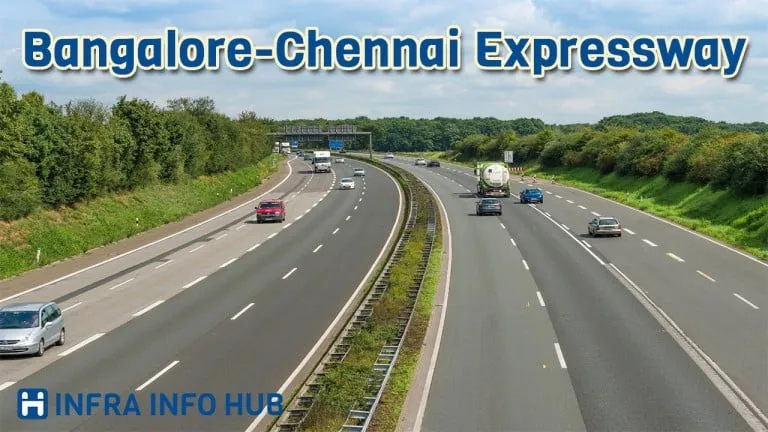
    Bengaluru-Chennai Expressway Nears Completion: Full Launch Expected August 2025

    Union Road Transport Minister Nitin Gadkari has said that the Bengaluru–Chennai Expressway will be opened by Prime Minister Narendra Modi in August 2025.

    The Karnataka part of the expressway, which is 71 km long, is almost finished. But a lot of work is still left in the Andhra Pradesh and Tamil Nadu sections.

    Completed stretches in Karnataka include:

    • Hoskote to Malur (26.4 km) – built at a cost of ₹2,761.12 crore
    • Malur to Bangarpet (27.1 km) – cost ₹1,496.30 crore
    • Bangarpet to Bethamangala (17.5 km) – cost ₹1,047.63 crore

    The only work left in Karnataka is removing a small hill to build a minor bridge.

    In reply to a question from Rajya Sabha MP P. Wilson, Gadkari gave updates on the four packages of the project being built in Tamil Nadu.

    Although he had earlier hoped the expressway would be ready by December 2024, current progress shows that August 2025 is a more practical date. One section in Andhra Pradesh may be completed by early 2026.

    Bengaluru-Chennai Expressway -A Progress Update

    Table with 6 columns and 13 rows.
    Package (Length) Length(kms) Coverage Contractor Completion% Expected Completion Date
    Karnataka Package 1 26 Hoskote to Malur Dilip Buildcon 99 Completed
    Karnataka Package 2 27 Malur to Bangarpet Dilip Buildcon 99 Completed
    Karnataka Package 3 18 Bangarpet to Bethamangala KCC Buildcon 99 Completed
    Andhra Package 1 25 Bethamangala to Baireddypalle Montecarlo 65 31.03.2025
    Andhra Package 2 31 Baireddypalle to Bangarupalem APCO Infratech 45 17.06.2026
    Andhra Package 3 29 Bangarupalem to Gudipala Dilip Buildcon 84 03.10.2024
    Tamilnadu Package 1 24 Gudipala to Walajahpet Montecarlo 62 31.12.2024
    Tamilnadu Package 2 25 Walajahpet to Arakkonam KCC Buildcon 78 30.11.2024
    Tamilnadu Package 3 26 Arakkonam to Kancheepuram DP Jain & Co. 51 31.03.2025
    Tamilnadu Package 4 32 Kancheepuram to Sriperambadur Ramalingam Construction 61 28.02.2025
    Total Expressway Length (Main Carriageway) 262 Hoskote To Sriperumbudur
    Six Laning NH4 Sriperumbudur-Maduravoyal 23 Sriperumbudur-Maduravoyal NHAI 99 31.08.2024
    Maduravoyal-Chennai Port Elevated Expressway 20 Maduravoyal To Chennai Port J Kumar Infraprojects 1 20.05.2026

    (Source: Swarajyamag)

    In Tamil Nadu, a new 106 km greenfield expressway is being built and divided into four parts:

    • Gudipala (Andhra Pradesh) to Walajapet
    • Walajapet to Arakkonam
    • Arakkonam to Kancheepuram
    • Kancheepuram to Sriperumbudur

    Work is moving ahead at different speeds. The stretch from Walajapet to Arakkonam is 78% complete, while Arakkonam to Kancheepuram is at 51%.

    In Andhra Pradesh, work on three parts was delayed due to the need for environmental approvals.

    In March 2023, the National Board for Wildlife gave permission to begin construction near a forest and wildlife area as part of Phase 2 of the project. This phase needed special clearance because the route goes through the Palamaner Reserved Forest, which is near the Kaundinya Wildlife Sanctuary. About 50 km of the road falls inside the eco-sensitive zone (within 10 km of a wildlife sanctuary).

    Though the road doesn’t directly go through the sanctuary, it does pass nearby. It also cuts through Palamaner Reserved Forest, part of the Rayala Elephant Reserve. For this, around 54.64 acres of forest land were used.

    Phase 2 is 85 km long, mostly in Andhra Pradesh, with a 5.5 km stretch in Karnataka. It starts near N.G. Hulkur village (close to Bangarpet in Kolar, Karnataka) and ends at Ramapuram village in Chittoor, Andhra Pradesh.

    Construction work for this phase has been given to Montecarlo Ltd., PCO Infratech Pvt. Ltd., and Dilip Buildcon Ltd.

    This part of the expressway will include:

    • 17 major bridges (one over a canal)
    • 34 minor bridges
    • 20 underpasses for vehicles
    • 8 overpasses for vehicles
    • 26 small vehicle underpasses
    • 2 toll plazas
    • 4 interchanges

    Since the expressway crosses elephant routes at three spots in the Rayala Elephant Reserve, the NHAI has added special designs like elephant underpasses, culverts, and bridges to allow animals to move freely.

    A survey with the Forest Department helped decide where to build these underpasses. To protect small animals too, minor bridges will be built across streams, and three-box culverts will be added for their movement.

    The Wildlife Board has made it clear that the forest land taken must only be used for the expressway, not for any business use. All work must be done under the Forest Department’s supervision, with clear markings done before construction starts. Also, digging in nearby forest areas to collect soil is not allowed.