
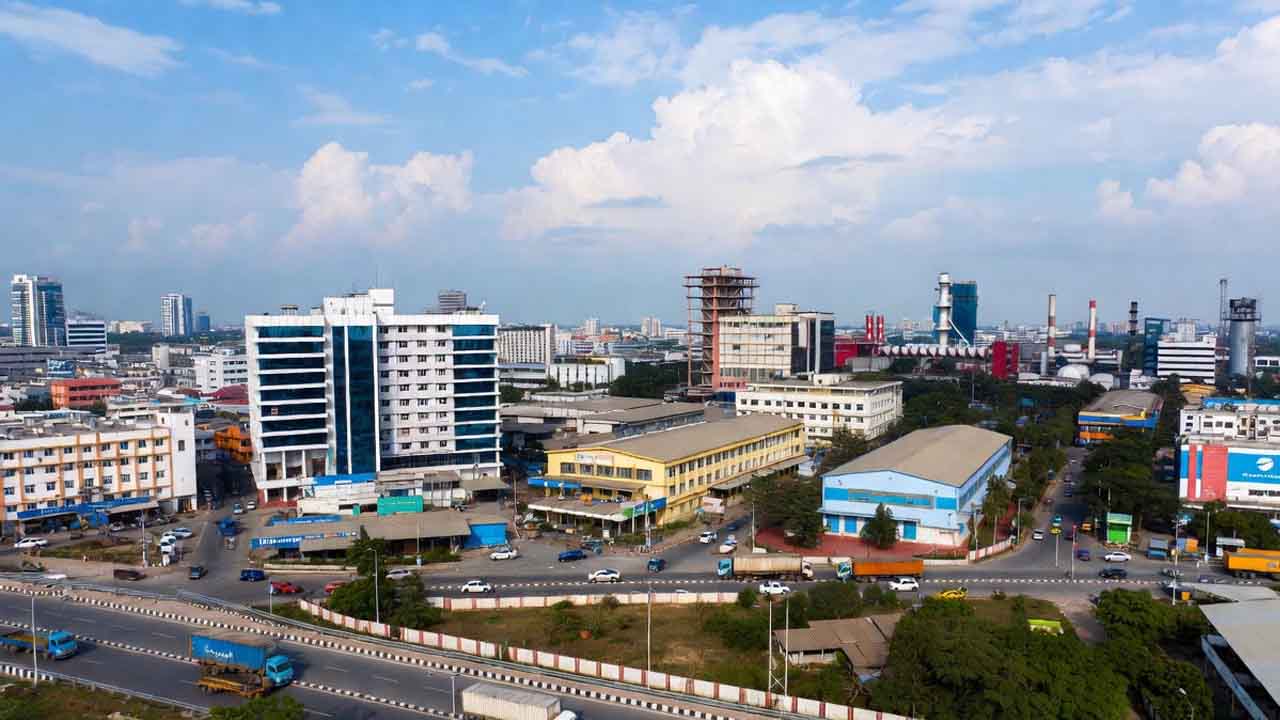
Nagpur is rapidly positioning itself as the central pillar of Maharashtra’s new industrial and defence corridor, a development that carries national strategic significance. Backed by policy alignment, land availability, multimodal connectivity, and proximity to defence manufacturing ecosystems, the city is evolving from a logistics crossroads into a high-value industrial and defence production hub.
This transformation marks a structural shift in Maharashtra’s industrial geography, with Nagpur playing a pivotal role in decentralising heavy manufacturing away from saturated western belts while strengthening India’s domestic defence capabilities.
Why Nagpur Is Central to Maharashtra’s Defence Corridor Vision
Nagpur’s selection is not incidental. Its geographical centrality enables efficient movement of goods across northern, southern, eastern, and western India. This advantage is further amplified by the city’s integration into national highway networks, rail freight corridors, and aviation infrastructure.
The presence of the Multi-Modal International Cargo Hub and Airport at Nagpur (MIHAN) adds a critical logistics dimension, allowing rapid transport of high-value defence components and industrial equipment. For defence manufacturing, where time-sensitive supply chains and secure logistics are non-negotiable, this infrastructure becomes a decisive factor.
Defence Manufacturing Ecosystem Taking Shape
Maharashtra’s corridor plan envisions Nagpur as a nucleus for defence production units, ancillary suppliers, and advanced engineering facilities. The focus spans aerospace components, armoured vehicle systems, electronics, and precision engineering.
Public sector defence enterprises, private manufacturers, and MSME clusters are expected to co-locate, creating a layered ecosystem rather than isolated industrial units. This clustering effect reduces costs, improves supplier coordination, and accelerates innovation cycles.
Importantly, the corridor aligns with national defence indigenisation objectives, enabling domestic production of components that were previously import-dependent.
Industrial Expansion Beyond Defence
While defence manufacturing forms the backbone of the corridor, the industrial footprint extends further. Nagpur is being positioned as a magnet for sectors such as renewable energy equipment, advanced materials, electric mobility components, and heavy engineering.
Large contiguous land parcels around Nagpur provide flexibility for integrated industrial townships, something increasingly rare in established western Maharashtra belts. This availability supports long-term expansion without the fragmentation issues seen in older industrial zones.
Infrastructure Readiness and Policy Support
Infrastructure readiness is a defining strength of the Nagpur corridor plan. Dedicated freight routes, upgraded rail sidings, and power infrastructure enhancements are being aligned to support energy-intensive manufacturing.
On the policy front, the state government is streamlining approvals, offering incentive packages, and coordinating with central agencies to fast-track defence-related clearances. The corridor benefits from a convergence of state industrial policy and national defence procurement frameworks, reducing execution friction.
Employment and Skill Development Impact
The industrial and defence corridor is expected to generate high-quality employment across engineering, manufacturing, logistics, and R&D roles. Unlike traditional industrial expansion, the emphasis here is on skill-intensive jobs rather than purely labour-intensive manufacturing.
Training institutions and technical universities in and around Nagpur are being mapped to support this demand, ensuring a steady pipeline of skilled manpower aligned with defence and advanced manufacturing requirements.
Strategic Implications for Central India
Nagpur’s emergence as a defence-industrial hub reshapes the economic profile of central India. It reduces regional imbalances by attracting capital investment away from coastal and metropolitan clusters while reinforcing supply chain resilience.
From a national security perspective, the inland location offers strategic depth, insulating critical defence production from coastal vulnerabilities. This factor alone elevates Nagpur’s importance beyond state-level industrial planning.
A Long-Term Industrial Anchor for Maharashtra
As Maharashtra advances its industrial and defence corridor roadmap, Nagpur stands out as its most strategically placed anchor. The convergence of logistics, land, policy support, and defence manufacturing potential positions the city for sustained industrial relevance over the next several decades.
Rather than a short-term industrial push, the Nagpur corridor represents a structural reorientation of Maharashtra’s industrial future, with defence and advanced manufacturing at its core.
