Tag: Indian Railways

  • Mumbai–Ahmedabad High-Speed Rail – Route, Map, Station List, Cost, Progress

    Mumbai–Ahmedabad High-Speed Rail – Route, Map, Station List, Cost, Progress

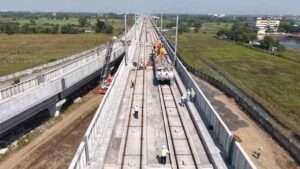
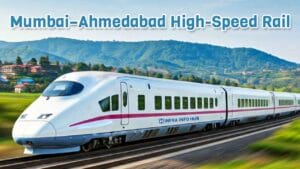
    The Mumbai–Ahmedabad high-speed rail corridor is a big project in India. It aims to link Mumbai and Ahmedabad with a High-Speed rail system, which will be part of India’s High-Speed Rail Corridor networks.

    This project will change how we travel in India. The Mumbai–Ahmedabad high-speed rail route is 508 kilometers long with 12 stations.

    The project will cost around ₹1.1 lakh crore. The Indian government and Japanese investor JICA will help to fund it.

    Project Overview

    • Length: 508.17 km
    • Stations: 12
    • Cost: ₹1.1 lakh crore
    • Operating speed: 320 km/h (200 mph)
    • Operator: National High-Speed Rail Corporation Limited
    • Owner: Indian Railways
    • Completion Time: 2026 (Surat to Bilimora), 2028 (Total Section)

    Project Route:

    • States: Gujarat – 348 km, Maharashtra – 156 km
    • UT: Dadra and Nagar Haveli – 4 km
    • Elevated: 468 km
    • Underground: 27 km (2 km under sea at Thane Creek)
    • At-Grade: 13 km

    Key Takeaways

    • The Mumbai–Ahmedabad high-speed rail corridor will connect Mumbai and Ahmedabad with a high-speed rail link.
    • The project will span approximately 508 kilometers with 12 stations along the route.
    • The estimated cost of the project is around ₹1.1 lakh crore.
    • The project will be funded by the Indian government and Japanese investors JICA.
    • The high-speed rail corridor will reduce travel time and increase economic growth.
    • The project is a part of India’s high-speed rail network and will be a bullet train project.
    • The Mumbai–Ahmedabad high-speed rail corridor will boost India infrastructure and Economic growth.

    Route and Alignment Details

    The Mumbai–Ahmedabad high-speed rail corridor will be about 508 kilometers long. It will go through Maharashtra, Gujarat, Dadra and Nagar Haveli and Daman and Diu.

    It will pass through Mumbai, Thane, and Palghar districts in Maharashtra and eight districts in Gujarat: Valsad, Navsari, Surat, Bharuch, Vadodara, Anand, Kheda, and Ahmedabad.

    The route will have 12 stations.

    Maharashtra:

    1. Mumbai (Bandra Kurla Complex – BKC) 2. Thane 3. Virar 4. Boisar

    Gujarat:

    5. Vapi 6. Bilimora 7. Surat 8. Bharuch 9. Vadodara 10. Anand 11. Ahmedabad 12. Sabarmati

    To get past rivers, hills, and cities, bridges, tunnels, and viaducts will be built. The part in Maharashtra will be about 156 kilometers. The part in Gujarat will be around 348 kilometers and 4 kilometers in Dadra Nagar Haveli.

    Mumbai–Ahmedabad High-Speed Rail Route Map

    Mumbai–Ahmedabad High-Speed Rail Route Map

    Station Design and Concept

    1. Mumbai High-Speed Rail Station

    Mumbai High-Speed Rail Station

    • No. of Platforms: 6
    • No. of Lines: 6
    • Station Theme: Arabian Sea

    2. Thane High-Speed Rail Station

    Thane High-Speed Rail Station

    • No. of Platforms: 4
    • No. of Lines: 4
    • Station Theme: River Waves

    3. Virar High-Speed Rail Station

    Virar High-Speed Rail Station

    • No. of Platforms: 2
    • No. of Lines: 4
    • Station Theme: Hilly area, Winds from the mountains

    4. Boisar High-Speed Rail Station

    Boisar High-Speed Rail Station

    • No. of Platforms: 3
    • No. of Lines: 5
    • Station Theme: Fishing Heritage of Boisar

    5. Vapi High-Speed Rail Station

    Vapi High-Speed Rail Station

    • No. of Platforms: 2
    • No. of Lines: 4
    • Station Theme: Industrial Pace, symbolize speed and efficiency

    6. Bilimora High-Speed Rail Station

    Bilimora High-Speed Rail Station

    • No. of Platforms: 2
    • No. of Lines: 4
    • Station Theme: Mango Orchards

    7. Surat High-Speed Rail Station

    Surat High-Speed Rail Station

    • No. of Platforms: 4
    • No. of Lines: 4
    • Station Theme: Diamond

    8. Bharuch High-Speed Rail Station

    Bharuch High-Speed Rail Station

    • No. of Platforms: 3
    • No. of Lines: 5
    • Station Theme: Bharuch’s 150-year-old cotton weaving heritage

    9. Vadodara High-Speed Rail Station

    Vadodara High-Speed Rail Station

    • No. of Platforms: 4
    • No. of Lines: 4
    • Station Theme: Banyan Tree

    10. Anand/Nadiad High-Speed Rail Station

    Anand/Nadiad High-Speed Rail Station

    • No. of Platforms: 2
    • No. of Lines: 4
    • Station Theme: Milk City of India, Milk Droplets

    11. Ahmedabad High-Speed Rail Station

    Ahmedabad High-Speed Rail Station

    • No. of Platforms: 2
    • No. of Lines: 2
    • Station Theme: Colorful Kites, Rich culture and heritage

    12. Sabarmati High-Speed Rail Station

    Sabarmati High-Speed Rail Station

    • No. of Platforms: 4
    • No. of Lines: 4
    • Station Theme: Sabarmati River and Gandhi’s charkha

    Mumbai–Ahmedabad High-Speed Rail Corridor

    The Mumbai to Ahmedabad rail corridor is a big project in India. It aims to cut travel time between the cities to less than 2 hours. This project is part of India’s plan to better its rail system.

    This project wants to make a fast rail link. It will help the economy grow and make travel better. The Mumbai–Ahmedabad high-speed rail will use the latest bullet train tech. This will let trains go up to 320 kilometers per hour.

    Project Background and Vision

    The idea for this project started in 2013. Since then, a lot of work has been done. The rail corridor needs new tracks, stations, and bridges.

    Key Features of the Bullet Train Project

    Some important parts of the project are:

    • Advanced bullet train technology
    • Trains can go up to 320 kilometers per hour
    • Travel time between Mumbai and Ahmedabad will be less than 2 hours

    Technical Specifications and Design Features

    The Indian railways are moving fast with new high-speed rail tech. The Mumbai–Ahmedabad high-speed rail corridor is a big step. Trains will go up to 320 kilometers per hour.

    This speed is thanks to top-notch signaling and communication. It makes the trains run safely and smoothly.

    Some key features of the project include:

    • Maximum acceleration of 2.5 kilometers per hour per second
    • Advanced signaling and communication systems
    • Modern and sleek train design, prioritizing passenger comfort and convenience

    The high-speed rail technology shows India’s drive for innovation. As the Indian railways grow, we’ll see more projects like this. This will make India a leader in high-speed rail.

    The project focuses on safety, efficiency, and comfort. This is thanks to the Indian railways’ commitment to excellent service. With high-speed rail technology, the Mumbai–Ahmedabad corridor will raise the bar for transport in India. The Indian railways are leading this change.

    Feature Description
    Speed Up to 320 kilometers per hour
    Acceleration 2.5 kilometers per hour per second
    Signaling and Communication Advanced systems for safe and efficient operation

    Project Cost Analysis and Funding Structure

    The project is estimated to cost ₹1.1 lakh crore ($13 billion) Including 24 trainsets, interest during construction, and import duties. In 2017, JICA agreed to finance 81% of the project, i.e. ₹88,087 crore (equivalent to ₹1.2 trillion or US$14 billion in 2023).

    The project will be completed through a 1.5 trillion Japanese yen loan for 50 years at an interest rate of 0.1% with a moratorium on repayment for 15 years. The remaining cost will be borne by the Maharashtra and Gujarat governments. Twenty percent of the components used in the corridor will be imported from Japan, while the rest will be manufactured in India.

    Construction Progress and Timeline

    The Mumbai–Ahmedabad high-speed rail corridor is being built. A lot of construction progress has been made. The project timeline is to finish by 2028.

    The first part of the corridor should open by 2026. The Indian railways project has hit some bumps. But, the government and contractors are pushing to meet deadlines and stay within budget.

    They’ve hit big milestones. For example, they’ve finished geological surveys and started laying tracks.

    Expected Deadlines

    The project’s end dates are set as follows:

    • 2026: First phase Surat to Bilimora is expected to be operational
    • 2028: Project expected to be completed

    Conclusion: Future of High-Speed Rail Transportation in India

    The Mumbai-Ahmedabad high-speed rail corridor is a big step for India’s transport. It will change how people travel in the country. It will be fast, efficient, and comfy.

    This project’s success will open the door for more high-speed rail lines in India. It will change the country’s transport and help it grow in a green way.

    The Mumbai-Ahmedabad high-speed rail is almost done. It will make India’s transport future look bright. It will use new tech and care for the environment.

    This project will bring jobs and help businesses grow. It will make the area more connected and prosperous.

    When this project is finished, it will show India’s dedication to better transport. It will use new tech and care for the planet.

    India will become more efficient and green. People and goods will move easier. This will make the country richer and better for everyone.

    FAQ

    What is the Mumbai–Ahmedabad high-speed rail corridor?

    The Mumbai–Ahmedabad high-speed rail corridor is a big project in India. It aims to link Mumbai and Ahmedabad with a fast train. This project will change how we travel, making it faster and boosting the economy.

    What are the key features of the bullet train project?

    The project uses the latest bullet train tech. Trains will go up to 320 kilometers per hour. It also needs new tracks, stations, and bridges for the infrastructure.

    What are the technical specifications of the high-speed rail technology?

    The trains will go up to 320 kilometers per hour. They can speed up 2.5 kilometers per second. The project also has advanced systems for safe and smooth travel.

    What is the route map and alignment of the Mumbai–Ahmedabad high-speed rail corridor?

    The corridor will be about 508 kilometers long. It goes through Maharashtra and Gujarat. There will be 12 stations, mostly in Gujarat. The project needs detailed surveys to find and solve challenges.

    What are the station architecture and facilities?

    The stations will be modern and comfy for passengers. They will have air-conditioned areas, food, and easy ticketing. It’s all about a good travel experience.

    What is the project cost and funding structure?

    The project costs about $14.5 billion. The Indian government and Japanese investor JICA have funded it. The cost will be split between Maharashtra and Gujarat based on the corridor’s length in each state.

    What is the current construction progress and timeline?

    The project is being built now, with good progress. It’s set to finish by 2028. The first part will open in 2026.

    What are the environmental impact and sustainability measures?

    The project aims to be green and use less energy. It will use tech like regenerative braking and solar power. This helps reduce its environmental footprint.

  • India Nears 100% Broad-Gauge Railway Electrification in Historic Green Milestone

    India Nears 100% Broad-Gauge Railway Electrification in Historic Green Milestone

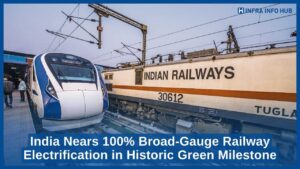
    India’s sprawling railway lattice — one of the largest on Earth — has reached a historic threshold: nearly 99% of its broad-gauge network now thrums with electric energy. This milestone, monumental in both scale and ambition, is not a mere infrastructural upgrade; it is a defining chapter in the nation’s pursuit of sustainable mobility.

    A National Mission in Full Throttle

    This transformation is no accident of progress. It has been forged through a government-driven, mission-mode campaign to wean the Indian Railways off diesel and usher in an era of greener propulsion. The shift not only symbolises a technical triumph but also a strategic redirection of India’s transport philosophy.

    In a formal statement to the Rajya Sabha, Railways Minister Ashwini Vaishnaw traced the contours of this change. Before 2014, the electrified length of India’s broad-gauge arteries stood at 21,801 kilometres. In the subsequent decade, the network expanded its electric reach by an astounding 46,900 kilometres — more than doubling the pre-2014 coverage. This sheer acceleration underscores the government’s determination to rewrite the nation’s transport blueprint.

    Almost There — The Last Stretch

    “Presently, about 99% of the Broad Gauge (BG) network is energised,” Vaishnaw declared. “The residual segments, scattered across challenging terrains and remote outposts, are already in the throes of active electrification.”

    What remains is not a matter of hesitation but of logistics — the final pieces of a nearly complete puzzle. Once achieved, India will join an elite league of nations with a fully electrified broad-gauge system, enhancing both operational capacity and environmental stewardship.

    Why Electrification Matters Beyond the Obvious

    While the benefits of cleaner trains might seem self-evident, the true gains lie deeper. The replacement of diesel-powered locomotives drastically reduces carbon emissions, improves energy efficiency, and curtails dependence on imported fossil fuels — a matter of acute strategic relevance.

    Electric trains also deliver greater hauling power and speed consistency, enabling faster passenger services and more reliable freight movement. This leap translates into economic uplift and environmental resilience for a nation where the railways form the arterial lifeline of commerce and commuting.

    Moreover, electric traction’s lower operating costs will free financial resources that can be reinvested into modernisation and passenger services. The ripple effects — from cheaper logistics for industry to reduced travel times for ordinary citizens — are poised to be substantial.

    Station Modernisation: The Other Half of the Revolution

    Parallel to the electrification drive, Indian Railways is reimagining the very gateways through which passengers experience rail travel. Under the Amrit Bharat Station Scheme, a sweeping modernisation effort is underway to transform 1,337 stations into hubs of convenience, connectivity, and civic pride.

    This is not merely a matter of repainting walls or adding a few amenities. The programme envisions:

    • Upgraded passenger facilities such as clean waiting lounges, advanced ticketing systems, and improved restrooms.

    • Accessibility enhancements for differently-abled travellers, ensuring inclusivity at every level.

    • Urban integration, with better linkages to bus terminals, metro stations, and airports.

    • Sustainable design practices include energy-efficient lighting, water recycling systems, and solar rooftops.

    Minister Vaishnaw noted that Phase-I works for 105 stations have already reached completion, signalling that the transformation is not a distant promise but an ongoing reality.

    The Economic and Social Undercurrents

    The electrification and station rejuvenation efforts are not isolated projects; they form a cohesive national strategy. Together, they promise to:

    • Stimulate job creation in infrastructure, engineering, and allied industries.

    • Enhance tourism potential, as improved connectivity and station aesthetics attract travellers.

    • Strengthen regional economies, especially in areas previously underserved by modern infrastructure.

    The cumulative effect is a more interconnected India, where travel is faster, cleaner, and more dignified.

    The Road — or Rail — Ahead

    Even as India approaches full electrification, the journey is far from over. The next frontier includes integrating smart technologies such as predictive maintenance, real-time passenger information systems, and AI-driven scheduling for maximum efficiency.

    High-speed rail corridors, already in development, will benefit from the robust electrification backbone. Likewise, freight corridors dedicated to goods movement will leverage the electric network to boost efficiency and reduce transit times.

    A Symbol of National Resolve

    The near-completion of broad-gauge electrification stands as a symbol of execution capability in a country often criticised for bureaucratic delays. It demonstrates that with political will, technological focus, and sustained investment, even the largest infrastructural overhauls are possible within compressed timelines.

    This transformation is more than steel tracks and overhead wires. It is the story of a nation in motion, aligning its infrastructural evolution with its environmental and economic aspirations. It is the hum of electric locomotives replacing the growl of diesel engines — a sound that whispers of a cleaner, faster, and more connected future.

    As the last stretches of track come alive with electric current, India’s railways are poised not just to carry passengers and goods, but to carry forward the very momentum of the nation itself.

  • Darbhanga Anand Vihar Amrit Bharat Express Train – Ticket Fares, Stations and More

    Darbhanga Anand Vihar Amrit Bharat Express Train – Ticket Fares, Stations and More

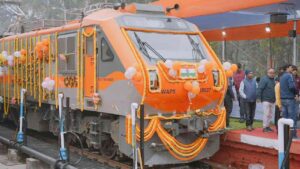
    Indian Railways has introduced the Amrit Bharat Express, a new train with modern design and bright orange-brown colors. These trains use aerodynamic engines and a push-pull system, which means there’s an engine at both ends. This setup helps the train move faster and saves time.

    Coach Details

    The Darbhanga–Anand Vihar Amrit Bharat Express has 22 coaches in total:

    • 2 coaches for guards and unreserved passengers
    • 12 sleeper coaches (3-tier)
    • 8 general second-class coaches

    This makes it easier for both long-distance and regular passengers to travel comfortably.

    Ticket Price

    The exact fare for this train is not yet available on the IRCTC website.

    Train Schedule

    • Train No. 15557 leaves Darbhanga every Monday and Thursday at 3:00 PM, and reaches Anand Vihar Terminal, Delhi at 12:35 PM the next day.

    • Train No. 15558 runs in the reverse direction. It departs Anand Vihar every Tuesday and Friday at 3:10 PM, reaching Darbhanga at 11:50 PM the next day.

    Route Map

    This train stops at several stations, including:
    Kamtaul, Janakpur Road, Sitamarhi, Bairagnia, Raxaul, Narkatiaganj, Bagha, Kaptanganj, Gorakhpur, Basti, Mankapur, Ayodhya Dham, Lucknow, Kanpur Central, Etawah, Tundla, Aligarh, and ends at Anand Vihar Terminal.

    Ayodhya Dham Station Upgrade

    The new Ayodhya Dham Junction has been built at a cost of ₹240 crore. This three-storey building has modern features like lifts, escalators, food courts, and childcare rooms. It is also a certified green building by the Indian Green Building Council (IGBC), showing a focus on eco-friendly construction.

    Launch by the Prime Minister

    The Prime Minister will launch two Amrit Bharat Express trains:

    • Darbhanga–Ayodhya–Anand Vihar Terminal

    • Malda City–Sir M. Visvesvaraya Terminal (Bengaluru)

    In addition, six new Vande Bharat Express trains will begin service. They will run on routes like:

    • Ayodhya to Anand Vihar Terminal

    • Shri Mata Vaishno Devi Katra to New Delhi

    • Amritsar to Delhi

    • Coimbatore to Bengaluru

    • Mangalore to Madgaon

    • Jalna to Mumbai

    Budget and Construction

    Northern Railway has spent ₹241 crore on the new building and facilities at Ayodhya station, which is a bit away from the Ram Mandir.

    Amrit Bharat Train

    Features of Amrit Bharat Trains

    These trains are built like the Vande Bharat trains but with some unique advantages:

    • Two Engines: One in the front and one in the back, for better speed and no need to reverse engines at stations. The train can reach speeds of 130 km/h.

    • Smooth Ride: New design ensures a comfortable journey with fewer bumps.

    • Coach Layout:

      • 12 Sleeper Coaches
      • 8 General Coaches
      • 1 Parcel Van
      • 1 Brake Van
    • Power Supply: Power comes directly from the two engines, so no extra power cars are needed. This saves energy and helps the environment.

    • Ticket Booking: Passengers need to mention Amrit Bharat while booking, as fares might vary.

    This new train is a major step forward for Indian Railways—faster, cleaner, and more comfortable for all passengers.

  • Amrit Bharat Station Scheme – Complete List of 1275 Railway Station Redevelopment Projects

    Amrit Bharat Station Scheme – Complete List of 1275 Railway Station Redevelopment Projects

    The Railway Ministry has announced the Amrit Bharat Station Scheme, which will modernize 1309 railway stations nationwide. This scheme aims to improve passengers’ railway travel experience. Indian Railways is working very fast in this area.

    Prime Minister Narendra Modi laid the foundation stone and inaugurated and dedicated 2000 railway infrastructure projects to the nation through video conferencing. 

    The cost of these projects is more than Rs 41,000 crore. Prime Minister launched the redevelopment of 554 railway stations under the Amrit Bharat Station Scheme. 

    These stations located in 27 states and union territories will be rebuilt at a cost of more than Rs 19,000 crore. On this occasion, he said that India today dreams big and works day and night to fulfill those dreams.

    About Amrit Bharat Station Scheme

    Amrit Bharat Station Scheme was launched by Prime Minister Narendra Modi. This Amrit Bharat Station Scheme aims to redevelop 1309 railway stations all around the country. Reconstruction of all the stations will be done at a cost of Rs 25000 crores. The scheme focuses on reviving and modernizing existing railway stations so that they meet global standards of quality. The Railway Ministry said that the Amrit Bharat Station Scheme will provide international facilities to passengers and enhance their overall travel experience. Also, this time the government will not follow the policy of one show fits all; Instead, she will tailor her strategy to the specific needs of the station. So that they can solve specific problems at their respective stations.

    World Class Railway Stations

    The Railway Ministry has announced the “Amrit Bharat Stations” scheme, which aims to modernize the reconstruction of 1309 railway stations across the country. This scheme aims to make the railway travel experience of passengers better than before. Keeping in mind the long-term requirements of each station and the needs of passengers, an optimal plan will be made in this scheme. Railway stations will be rebuilt.

    Now people question what kind of facilities will be provided to the passengers under this scheme? The government has also issued a press release, in which the changes and developments taking place in the station have been explained so that all the questions of the people can be answered.

    delhi railway station redevelopment

    Ahmedabad Railway Station Redevelopment

    delhi railway station redevelopment

    Amritsar Railway Station Redevelopment

    World Class Facilities

    The already existing structures of the station, especially the entry gates, will be made attractive. By relocating the old buildings, space will be saved for passenger convenience and upcoming development. 

    Wherever possible, older structures will be improved rather than new buildings being built at the station. There will be canteens (cafeteria) and waiting rooms at the stations. There will be space to set up two stalls of ‘One Station One Product’ at each station.

    A convenient and comfortable space will be created at the station for business meetings. Hoardings and signboards in easy languages will be installed everywhere at the station so that passengers can easily get information. Wider pathways will be built at all stations. 

    Better lighting, parking, lifts, and automatic pathways will be built at the stations. Posters, paintings, sculptures, artworks, and plants will decorate the station. Paintings and artworks depicting local art will be installed at the station. High-level platforms and ballasted tracks will be installed at train maintenance facilities and platform lines.

    There will be self-cleaning drains, with beautifully designed covers, which will create a drainage path. Beautiful designs will be installed on the cables installed at the station. Passengers will be provided with free Wi-Fi and space in the tower for future 5G networks. Low-maintenance, durable and dust-proof materials will be used at the station. Comfortable and durable furniture will be installed in waiting halls, platforms, retiring rooms and offices.

    The public announcement system will be improved. There will be escalators at some stations. Special facilities will be available for Divyangjan (disabled) as per the guidelines of the Railway Board. An adequate number of toilets will be built with separate facilities for women and disabled people.

    Amrit Bharat Station Scheme Objective

    Making a master plan for railway stations and implementing minimum essential amenities (MAE) facilities in different phases. Looking into the future, city centers and roof plazas will be built at the stations. New facilities will be prioritized after taking into account station usage studies and stakeholder requirements. To make the wait for passengers at the station better, existing facilities will be improved and new facilities will be provided.

    Amrit Bharat Station Scheme List

    Amrit Bharat Station Scheme UP List

    No. of Stations : 149

    Achhnera Station, Agra Cantt. Station, Agra Fort Station, Aishbagh, Akbarpur Jn, Aligarh Jn., Amethi, Amroha, Ayodhya, Azamgarh, Babatpur, Bachhrawan, Badaun, Badshahnagar, Badshahpur, Baheri, Bahraich, Ballia, Balrampur, Banaras, Banda, Barabanki Jn, Bareilly, Bareilly City, Barhni, Basti, Belthara Road, Bhadohi, Bharatkund, Bhatni, Bhuteshwar, Bulandsahar, Chandauli Majhwar, Chandausi, Chilbila, Chitrakut dham karwi, Chopan, Chunar Jn., Daliganj, Darshannagar, Deoria Sadar, Dildarnagar, Etawah Jn., Farrukhabad, Fatehabad, Fatehpur, Fatehpur Sikri, Firozabad, Gajraula, Garhmukteshwar, Gauriganj, Ghatampur, Ghaziabad, Ghazipur City, Gola Gokarnath, Gomtinagar, Gonda, Gorakhpur, Govardhan, Govindpuri, Gursahaiganj, Haidergarh, Hapur, Hardoi, Hathras City, Idgah, Izzatnagar, Janghai Jn, Jaunpur City, Jaunpur Jn, Kannauj, Kanpur Anwarganj, Kanpur Bridge Left bank, Kanpur Central, Kaptanganj, Kasganj, Kashi, Khalilabad, Khurja Jn., Kosi Kalan, Kunda Harnamganj, Lakhimpur, Lalganj, Lalitpur, Lambhua, Lohta, Lucknow (Charbagh), Lucknow city, Maghar, Mahoba, Mailani, Mainpuri Jn., Malhaur Jn, Manaknagar Jn, Manikpur Jn., Mariahu, Mathura, Mau, Meerut City, Mirzapur, Modi Nagar, Mohanlalganj, Moradabad, Nagina, Najibabad Jn., Nihalgarh, Orai, Panki Dham, Phaphamau Jn, Phulpur, Pilibhit, Pokhrayan, Pratapgarh Jn, Prayag Jn, Prayagraj, Pt. Deen Dayal Upadhyay , Raebareli Jn, Raja Ki Mandi, Ramghat Halt, Rampur, Renukoot, Saharanpur, Saharanpur Jn., Salempur, Seohara, Shahganj Jn, Shahjahanpur, Shamli, Shikohabad Jn., Shivpur, Siddharth nagar, Sitapur Jn., Sonbhadra, Sri Krishna Nagar, Sultanpur Jn, Suraimanpur, Swaminarayan Chappia, Takia, Tulsipur, Tundla Jn., Unchahar, Unnao Jn, Utraitia Jn, Varanasi Cantt., Varanasi City, Vindhyachal, Virangana Lakshmibai, Vyasnagar, Zafarabad

    Amrit Bharat Station Scheme Maharashtra List

    No. of Stations : 123

    Ahmednagar, Ajni (Nagpur), Akola, Akurdi, Amalner, Amgaon, Amravati, Andheri, Aurangabad, Badnera, Balharshah, Bandra Terminus, Baramati, Belapur, Bhandara Road, Bhokar , Bhusawal, Borivali, Byculla, Chalisgaon, Chanda Fort, Chandrapur, Charni Road, Chhatrapati Shivaji Maharaj Terminus, Chinchpokli, Chinchwad, Dadar, Daund, Dehu Road, Devlali, Dhamangaon, Dharangaon, Dharmabad , Dhule, Diva, Dudhani, Gangakher , Godhani, Gondia, Grant Road, Hadapsar, Hatkanangale, Hazur Sahib Nanded, Himayatnagar , Hinganghat, Hingoli Deccan, Igatpuri, Itwari, Jalna, Jeur, Jogeshwari, Kalyan, Kamptee, Kanjur Marg, Karad, Katol, Kedgaon, Kinwat , Kolhapur, Kopargaon, Kurduwadi, Kurla, Lasalgaon, Latur, Lokmanya Tilak Terminus, Lonand, Lonavla, Lower Parel, Malad, Malkapur, Manmad, Manwath Road , Marine Lines, Matunga, Miraj, Mudkhed , Mumbai Central, Mumbra, Murtajapur, Nagarsol , Nagpur, Nandgaon, Nandura, Narkher, Nasik Road, Osmanabad, Pachora, Pandharpur, Parbhani , Parel, Parli Vaijnath, Partur , Prabhadevi, Pulgaon, Pune Jn., Purna , Raver, Rotegaon , Sainagar Shirdi, Sandhurst Road, Sangli, Satara, Savda, Selu , Sewagram, Shahad, Shegaon, Shivaji Nagar Pune, Solapur, Talegaon, Thakurli, Thane, Titvala, Tumsar Road, Umri, Uruli, Vadala Road, Vidyavihar, Vikhroli, Wadsa, Wardha, Washim, Wathar

    Amrit Bharat Station Scheme West Bengal List

    No. of Stations : 94

    Adra , Alipurduar Jn., Aluabari Road, Ambika Kalna, Anara, Andal Jn., Andul, Asansol Jn., Azimganj Jn., Bagnan, Bally, Bandel Jn., Bangaon Jn., Bankura, Barabhum, Barasat, Barddhaman Jn., Barrackpore, Belda, Berhampore Court, Bethuadahari, Bhaluka Road, Binnaguri, Bishnupur, Bolpur (Santiniketan), Burnpur, Canning, Chandannagar, Chandpara, Chandrakona Road, Dalgaon, Dalkhola, Dankuni, Dhulian Ganga, Dhupguri, Digha, Dinhata, Dum Dum Jn., Falakata, Garbeta, Gede, Haldia, Haldibari, Harishchandrapur, Hasimara, Hijli, Howrah, Jalpaiguri Road, Jangipur Road, Jhalida, Jhargram, Joychandi Pahar, Kaliyaganj, Kalyani Ghoshpara, Kalyani Jn., Kamakhyaguri, Katwa Jn., Khagraghat Road, Kharagpur Jn., Kolkata, Krishnanagar City Jn., Kumedpur, Madhukunda, Madhyamgram, Malda Court, Malda Town, Mecheda, Midnapore, Nabadwip Dham, Naihati Jn., New Alipurduar, New Cooch Behar, New Farakka, New Jalpaiguri Jn., New Mal Jn., Panagarh, Pandabeswar, Panskura Jn., Purulia Jn., Rampurhat, Sainthia Jn., Salboni, Samsi, Sealdah, Shalimar, Shantipur, Seoraphuli Jn., Sitarampur, Siuri, Sonarpur Jn., Suisa, Tamluk, Tarakeswar, Tulin, Uluberia

    Amrit Bharat Station Scheme Gujarat List

    No. of Stations : 87

    Ahmedabad, Anand, Ankleshwar, Asarva, Bardoli, Bhachau, Bhaktinagar, Bhanvad, Bharuch, Bhatiya, Bhavnagar, Bhestan, Bhildi, Bilimora (NG), Bilimora Jn, Botad Jn., Chandlodia, Chorvad Road, Dabhoi Jn, Dahod, Dakor, Derol, Dhrangadhra, Dwarka, Gandhidham, Godhra Jn, Gondal, Hapa, Himmatnagar, Jam Jodhpur, Jamnagar, Jamwanthali, Junagadh, Kalol, Kanalus Jn., Karamsad, Keshod, Khambhaliya, Kim, Kosamba Jn., Lakhtar, Limbdi, Limkheda, Mahemadabad & Kheda road, Mahesana, Mahuva, Maninagar, Mithapur, Miyagam Karjan, Morbi, Nadiad, Navsari, New Bhuj, Okha, Padadhari, Palanpur, Palitana, Patan, Porbandar, Pratapnagar, Rajkot, Rajula Jn., Sabarmati (BG & MG), Sachin, Samakhiyali, Sanjan, Savarkundla, Sayan, Siddhpur, Sihor Jn., Somnath, Songadh, Surat, Surendranagar, Than, Udhna, Udvada, Umargaon Road, Unjha, Utran, Vadodara, Vapi, Vatva, Veraval, Viramgam, Vishvamitri Jn., Wankaner

    Amrit Bharat Station Scheme Bihar List

    No. of Stations : 86

    Anugraha Narayan Road, Ara, Bakhtiyarpur, Banka, Banmankhi, Bapudham Motihari, Barauni, Barh, Barsoi Jn, Begusarai, Bettiah, Bhabua Road, Bhagalpur, Bhagwanpur, Bihar Sharif, Bihiya, Bikramganj, Buxar, Chausa, Chhapra, Dalsingh Sarai, Darbhanga, Dauram Madhepura, Dehri On Sone, Dholi, Dighwara, Dumraon, Durgauti, Fatuha, Gaya, Ghorasahan, Guraru, Hajipur Jn, Jamalpur, Jamui, Janakpur Road, Jaynagar, Jehanabad, Kahalgaon, Karhagola Road, Khagaria Jn, Kishanganj, Kudra, Labha, Laheria Sarai, Lakhisarai, Lakhminia, Madhubani, Maheshkhunt, Mairwa, Mansi Jn, Munger, Muzaffarpur, Nabinagar Road, Narkatiaganj, Naugachia, Paharpur, Piro, Pirpainti, Rafiganj, Raghunathpur, Rajendra Nagar, Rajgir, Ram Dayalu Nagar, Raxaul, Sabaur, Sagauli, Saharsa, Sahibpur Kamal, Sakri, Salauna, Salmari, Samastipur, Sasaram, Shahpur Patoree, Shivanarayanpur, Simri Bakhtiyarpur, Simultala, Sitamarhi, Siwan, Sonpur Jn., Sultanganj, Supaul, Taregna, Thakurganj, Thawe

    Amrit Bharat Station Scheme Rajasthan List

    No. of Stations : 82

    Abu Road, Ajmer, Alwar, Asalpur Jobner, Balotra, Bandikui, Baran, Barmer, Bayana, Beawar, Bharatpur, Bhawani Mandi, Bhilwara, Bijainagar, Bikaner, Bundi, Chanderiya, Chhabra Gugor, Chittorgarh Jn., Churu, Dakaniya Talav, Dausa, Deeg, Degana, Deshnoke, Dholpur, Didwana, Dungarpur, Falna, Fatehnagar, Fatehpur Shekhawati, Gandhinagar Jaipur, Gangapur City, Gogameri, Gotan, Govind Garh, Hanumangarh, Hindaun City, Jaipur , Jaisalmer, Jalor, Jawai Bandh, Jhalawar City, Jhunjhunu, Jodhpur, Kapasan, Khairthal, Kherli, Kota, Lalgarh, Mandal Garh, Mandawar Mahwa Road, Marwar Bhinmal, Marwar Jn., Mavli Jn., Merta Road, Nagaur, Naraina, Nim ka Thana, Nokha, Pali Marwar, Phalodi, Phulera, Pindwara, Rajgarh, Ramdevra, Ramganj Mandi, Rana Pratapnagar, Rani, Ratangarh, Ren, Ringas, Sadulpur, Sawai Madhopur, Shri Mahaveerji, Sikar, Sojat Road, Somesar, Sri ganganagar, Sujangarh, Suratgarh, Udaipur City

    Amrit Bharat Station Scheme MP List

    No. of Stations : 80

    Akodia, Amla, Anuppur, Ashoknagar, Balaghat, Banapura, Bargawan, Beohari, Berchha, Betul, Bhind, Bhopal, Bijuri, Bina, Biyavra Rajgarh, Chhindwara, Dabra,Damoh, Datia, Dewas, Gadarwara, Ganjbasoda, Ghoradongri, Guna, Gwalior, Harda, Harpalpur, Hoshangabad, Indore, Itarsi Jn., Jabalpur, Junnor Deo, Kareli, Katni Jn, Katni Murwara, Katni South, Khachrod, Khajuraho, Khandwa, Khirkiya, LaxmiBai Nagar, Maihar, Maksi, Mandlafort, Mandsaur, MCS Chhatarpur, Meghnagar, Morena, Multai, Nagda, Nainpur, Narsinghpur, Neemuch, Nepanagar, Orchha, Pandhurna, Pipariya, Ratlam, Rewa, Ruthiyai, Sanchi, Sant Hirdaram Nagar, Satna, Saugor, Sehore, Seoni, Shahdol, Shajapur, Shamgarh, Sheopur Kalan, Shivpuri, Shridham, Shujalpur, Sihora Road, Singrauli, Tikamgarh, Ujjain, Umaria, Vidisha, Vikramgarh Alot

    Amrit Bharat Station Scheme Tamil Nadu List

    No. of Stations : 73

    Ambasamudram, Ambattur, Arakkonam Jn, Ariyalur, Avadi, Bommidi, Chengalpattu Jn, Chennai Beach, Chennai Egmore, Chennai Park, Chidambaram, Chinna Salem, Coimbatore Jn, Coimbatore North, Coonoor, Dharmapuri, Dr. M.G. Ramachandran Central, Erode Jn., Guduvancheri, Guindy, Gummidipundi, Hosur, Jolarpettai Jn, Kanniyakumari, Karaikkudi, Karur Jn., Katpadi, Kovilpatti, Kulitturai, Kumbakonam, Lalgudi, Madurai Jn, Mambalam, Manaparai, Mannargudi, Mayiladuturai Jn., Mettupalayam, Morappur, Nagercoil Jn., Namakkal, Palani, Paramakkudi, Perambur, Podanur Jn., Pollachi, Polur, Pudukkottai, Rajapalayam, Ramanathapuram, Rameswaram, Salem, Samalpatti, Sholavandan, Srirangam, Srivilliputtur, St.Thomas Mount, Tambaram, Tenkasi, Thanjavur Jn, Thiruvarur Jn., Tiruchendur, Tirunelveli Jn, Tirupadripulyur, Tirupattur, Tiruppur, Tiruttani, Tiruvallur, Tiruvannamalai, Udagamandalam, Vellore Cantt., Villupuram Jn., Virudhunagar jn, Vriddhachalam Jn.

    Amrit Bharat Station Scheme Andhra Pradesh List

    No. of Stations : 72

    Adoni, Anakapalle, Anantapur, Anaparthi , Araku, Bapatla , Bhimavaram Town, Bobbili Jn, Chipurupalli, Chirala, Chittoor, Cuddapah, Cumbum, Dharmavaram, Dhone, Donakonda, Duvvada, Elamanchili , Eluru, Giddalur, Gooty, Gudivada, Gudur, Gunadala, Guntur, Hindupur, Ichchpuram, Kadiri, Kakinada Town, Kottavalasa, Kuppam, Kurnool city, Macherla, Machilipatnam, Madanapalli Road, Mangalagiri, Markapuram Road, Matralayam Road, Nadikude Jn, Nandyal, Narasaraopet, Narsapur, Naupada Jn, Nellore, Nidadavolu, Ongole, Pakala, Palasa, Parvatipuram, Piduguralla, Piler, Rajampet, Rajamundry, Rayanapadu, Renigunta, Repalle, Samalkot, Sattenapalle, Simhachalam, Singaraykonda, Sri Kalahasti, Srikakulam Road, Sullurpeta, Tadepalligudem, Tadipatri, Tenali, Tirupati, Tuni, Vijayawada, Vinukonda, Vishakhapatnam, Vizianagaram Jn

    Amrit Bharat Station Scheme Odisha List

    No. of Stations : 57

    Angul, Badampahar, Balangir, Balasore, Balugaon, Barbil, Bargarh Road, Baripada, Barpali, Belpahar, Betnoti, Bhadrak, Bhawanipatna, Bhubaneswar, Bimlagarh, Brahmapur, Brajrajnagar, Chatrapur, Cuttack, Damanjodi, Dhenkanal, Gunupur, Harishanker Road, Hirakud, Jajpur-Keonjhar road, Jaleswar, Jaroli, Jeypore, Jharsuguda, Jharsuguda Road, Kantabanji, Kendujhargarh, Kesinga, Khariar Road, Khurda road, Koraput, Lingaraj Temple Road, Mancheswar, Meramandali, Muniguda, New Bhubaneswar, Panposh, Paradeep, Parlakhemundi, Puri, Raghunathpur, Rairakhol, Rairangpur, Rajgangpur, Rayagada, Rourkela, Sakhi Gopal, Sambalpur, Sambalpur city, Talcher, Talcher Road, Titlagarh Jn.

    Amrit Bharat Station Scheme Jharkhand List

    No. of Stations : 57

    Balsiring, Bano, Barajamda Jn, Barkakana, Basukinath, Bhaga , Bokaro Steel City , Chaibasa, Chakradharpur, Chandil, Chandrapura, Daltonganj, Dangoaposi, Deoghar, Dhanbad, Dumka, Gamharia, Gangaghat, Garhwa Road, Garhwa Town, Ghatsila, Giridih, Godda, Govindpur Road, Haidarnagar, Hatia, Hazaribagh Road, Jamtara, Japla, Jasidih, Katrasgarh, Koderma, Kumardhubi, Latehar, Lohardaga, Madhupur, Manoharpur, Muhammadganj, Muri, N.S.C.B. Gomoh, Nagaruntari, Namkom, Orga, Pakur, Parasnath, Piska, Rajkharswan, Rajmahal, Ramgarh Cant, Ranchi, Sahibganj, Sankarpur, Silli, Sini, Tatanagar, Tatisilwai, Vidyasagar

    Amrit Bharat Station Scheme Karnataka List

    No. of Stations : 55

    Almatti, Alnavar, Arsikere Junction, Badami, Bagalkot, Ballary, Bangalore Cantt., Bangarpet, Bantawala, Belagavi, Bidar, Bijapur, Chamaraja Nagar, Channapatna, Channasandra, Chikkamagaluru, Chitradurga, Davangere, Dharwad, Dodballapur, Gadag, Gangapur Road, Ghataprabha, Gokak Road, Harihar, Hassan, Hosapete, Kalaburagi, Kengeri, Kopal, Krantivira Sangolli Rayanna (Bengaluru Station), Krishnarajapuram, Malleswaram, Malur, Mandya, Mangalore Central, Mangalore Jn., Munirabad, Mysore, Raichur, Ramanagaram, Ranibennur, Sagar Jambagaru, Sakleshpur, Shahabad, Shivamogga Town, Shree Siddharoodha Swamiji Hubballi Jn, Subramanya Road, Talguppa, Tiptur, Tumakuru, Wadi, Whitefield, Yadgir, Yesvantpur

    Amrit Bharat Station Scheme Assam List

    No. of Stations : 49

    Amguri, Arunachal, Chaparmukh, Dhemaji, Dhubri, Dibrugarh, Diphu, Duliajan, Fakiragram Jn., Gauripur, Gohpur, Golaghat, Gosaigaon Hat, Haibargaon, Harmuti, Hojai, Jagiroad, Jorhat Town, Kamakhya, Kokrajhar, Lanka, Ledo, Lumding, Majbat, Makum Jn, Margherita, Mariani, Murkeongselek, Naharkatiya, Nalbari, Namrup, Narangi, New Bongaigaon, New Haflong, New Karimganj, New Tinsukia, North Lakhimpur, Pathsala, Rangapara North, Rangiya Jn, Sarupathar, Sibsagar Town, Silapathar, Silchar, Simaluguri, Tangla, Tinsukia, Udalguri, Viswanath Chariali

    Amrit Bharat Station Scheme Telangana List

    No. of Stations : 39

    Adilabad, Basar, Begumpet, Bhadrachalam Road, Gadwal, Hafizpeta, Hi-tech city, Huppuguda, Hyderabad, Jadcherla, Jangaon, Kacheguda, Kamareddi, Karimnagar, Kazipet Jn, Khammam, Lingampalli, Madhira, Mahabubabad, Mahbubnagar, Malakpet, Malkajgiri, Manchiryal, Medchal, Miryalaguda, Nalgonda, Nizamabad, Peddapalli, Ramagundam, Secunderabad, Shadnagar, Sri Bala Brahmeswara Jogulamba, Tandur, Umdanagar, Vikarabad, Warangal, Yadadri, Yakutpura, Zahirabad

    Amrit Bharat Station Scheme Kerala List

    No. of Stations : 34

    Alappuzha , Angadippuram, Angamali For Kaladi , Chalakudi , Changanassery, Chengannur , Chirayinikil, Ernakulam, Ernakulam Town, Ettumanur, Ferok, Guruvayur , Kasargod, Kayankulam , Kollam, Kozhikode, Kuttippuram, Mavelikara, Neyyatinkara , Nilambur Road, Ottappalam, Parappanangadi, Payyanur, Punalur, Shoranur Jn., Thalassery, Thiruvananthapuram, Thrisur, Tirur, Tiruvalla , Tripunithura, Vadakara, Varkala, Wadakancheri

    Amrit Bharat Station Scheme Chattisgarh List

    No. of Stations : 32

    Akaltara, Ambikapur, Baikunthpur Road, Balod, Baradwar, Belha, Bhanupratappur, Bhatapara, Bhilai, Bhilai Nagar, Bhilai Power House, Bilaspur, Champa, Dallirajhara, Dongargarh, Durg, Hathbandh, Jagdalpur, Janjgir Naila, Korba, Mahasamund, Mandir Hasaud, Marauda, Nipania, Pendra Road, Raigarh, Raipur, Rajnandgaon, Sarona, Tilda-Neora, Urkura, Uslapur

    Amrit Bharat Station Scheme Punjab List

    No. of Stations : 30

    Abohar, Amritsar, Anandpur Sahib railway station, Beas, Bathinda Jn, Dhandari Kalan, Dhuri Jn., Fazilka Jn., Firozpur Cantt, Gurdaspur, Hoshiarpur, Jalandhar Cantt., Jalandhar City, Kapurthala, Kotkapura, Ludhiana, Malerkotla, Mansa, Moga, Muktsar, Nangal Dam, Pathankot Cantt., Pathankot City, Patiala, Phagwara, Phillaur, Rup Nagar, Sangrur, SASN Mohali, Sirhind

    Amrit Bharat Station Scheme Haryana List

    No. of Stations : 29

    Ambala Cantt., Ambala City, Bahadurgarh, Ballabhgarh, Bhiwani Jn, Charkhi Dadri, Faridabad, Faridabad NT, Gohana, Gurugram, Hisar, Hodal, Jind, Kalka, Karnal, Kosli, Kurukshetra, Mahendragarh, Mandi Dabwali, Narnaul, Narwana, Palwal, Panipat, Pataudi Road, Rewari, Rohtak, Sirsa, Sonipat, Yamunanagar Jagadhari

    Amrit Bharat Station Scheme Delhi List

    No. of Stations : 13

    Adarsh Nagar, Anand Vihar, Bijwasan, Delhi, Delhi Cantt, Delhi Sarai Rohilla, Delhi Shahdara, Hazrat Nizamuddin, Narela, New Delhi, Sabzi Mandi, Safdarjung, Tilak Bridge

    Amrit Bharat Station Scheme Uttarakhand List

    No. of Stations : 11

    Dehradun, Haridwar Jn., Harrawala, Kashipur, Kathgodam, Kichha, Kotdwar, Lalkuan Jn., Ramnagar, Roorkee, Tanakpur

    Amrit Bharat Station Scheme Jammu & Kashmir List

    No. of Stations : 4

    Budgam, Jammu Tawi, Shri Mata Vaishno Devi Katra, Udhampur

    Amrit Bharat Station Scheme Himachal Pradesh List

    No. of Stations : 3

    Amb Andaura, Baijnath Paprola, Palampur

    Other Railway Stations

    • Tripura: Agartala, Dharmanagar, Kumarghat, Udaipur
    • Puducherry: Karaikal, Mahe, Puducherry
    • Goa: Sanvordem, Vasco-da-gama
    • Arunachal Pradesh: Naharalagun (Itanagar)
    • Manipur: Imphal
    • Meghalaya: Mehendipathar
    • Mizoram: Sairang (Aizawl)
    • Nagaland: Dimapur
    • Sikkim: Rangpo
    • Chandigarh: Chandigarh
  • Indian Railways Achieves a Major Milestone: Over 100 Stations Revamped with Modern Amenities

    Indian Railways Achieves a Major Milestone: Over 100 Stations Revamped with Modern Amenities

    Indian Railways has made remarkable strides in enhancing passenger comfort and convenience. Under the ambit of the Amrit Bharat Station Yojana, a significant transformation has taken place, rejuvenating over 100 railway stations across the nation.

    A Network Among the World’s Finest

    With one of the most expansive rail networks globally, Indian Railways ranks among the top five. In recent years, the focus has been on comprehensive modernization. This includes the deployment of cutting-edge train coaches, the rollout of premium services, and the upgrading of tracks to support semi-high-speed operations. The ongoing Amrit Bharat Station Yojana, initiated two years ago, is a pivotal part of this modernization drive, aimed at overhauling the nation’s railway infrastructure.

    Major Milestone Achieved

    As per Dilip Kumar, Executive Director of the Information and Publicity Department of Railways, the scheme has already seen the transformation of more than 100 stations, which will be officially dedicated to the nation on May 22. This ambitious initiative, launched two years ago, targets the modernization of over 1,300 stations, incorporating elements that reflect local culture and heritage while enhancing passenger convenience.

    Focus on Cultural and Heritage Integration

    The modernization effort emphasizes architectural designs that resonate with regional traditions. At these stations, new structures and posts are being crafted to align with local ethos, ensuring a blend of heritage and functionality. The aim is to provide maximum convenience to urban dwellers, with dual-side connectivity introduced at many locations.

    Seamless Connectivity and Free Wi-Fi

    To further enhance passenger experience, stations are being equipped with free Wi-Fi and advanced passenger information systems. This digital upgrade includes the transformation of entry points into model structures, ensuring a seamless blend of utility and aesthetics. Notable stations, including Saharanpur, Bijnor, Govardhan, Bareilly City, Siddharth Nagar, Sehore Junction, Samakhyali, and Palitana, have already been revamped.

    Relentless Progress Nationwide

    Stations across several states have also undergone substantial upgrades. In Rajasthan, multiple stations have been modernized, while Karnataka boasts five revamped stations, Tamil Nadu nine, and West Bengal three. Additionally, the Union Territory of Puducherry’s Mahe station, along with Andhra Pradesh’s Sulurpeta and Assam’s Harbar village stations, have also been transformed.

    Looking Ahead

    As the nation prepares for the grand dedication ceremony on May 22, these renewed stations symbolize a significant leap towards a more efficient, passenger-centric rail network, underlining the ongoing commitment to elevate the travel experience across India.

  • SWARAIL App Launched by Indian Railways: All-in-One App, From train ticket booking to PNR enquiries

    SWARAIL App Launched by Indian Railways: All-in-One App, From train ticket booking to PNR enquiries

    Introduction to the SWARAIL App

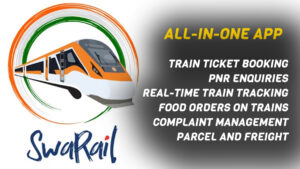
    The SWARAIL app, launched by the Ministry of Railways, represents a significant leap in digital innovation for the Indian Railways. This comprehensive platform aims to streamline the travel experience for millions of passengers, offering real-time information, seamless ticket booking, and personalized travel insights, all within a single application. In this article, we delve into the features, benefits, and strategic impact of the SWARAIL app in transforming India’s railway infrastructure.

    App Link: Download Now

    Key Features of the SWARAIL App

    1. Real-Time Train Tracking

    One of the standout features of the SWARAIL app is its real-time train tracking capability. It utilizes GPS and advanced data analytics to provide precise train locations, estimated arrival times, and delay updates, ensuring passengers stay informed throughout their journey. This feature significantly reduces uncertainty and enhances travel planning.

    2. Seamless Ticket Booking and Cancellation

    The app integrates IRCTC’s booking system, allowing users to book tickets effortlessly. It also supports multiple payment options, including UPI, net banking, and digital wallets, enhancing convenience. Furthermore, it offers simplified ticket cancellation processes, including instant refunds, making it a versatile travel companion.

    3. Personalized Travel Insights

    Leveraging AI-driven algorithms, the SWARAIL app provides personalized travel recommendations based on user history and preferences. This includes suggestions for alternate routes, seat availability updates, and alerts about platform changes, ensuring a highly customized travel experience.

    4. Multilingual Support and User-Friendly Interface

    The app caters to India’s diverse linguistic landscape with multilingual support, making it accessible to a broader audience. Its intuitive interface, combined with voice command capabilities, ensures ease of use even for first-time users.

    Benefits of the SWARAIL App for Passengers

    • Enhanced Travel Safety: Real-time tracking and instant notifications improve passenger safety and situational awareness.

    • Reduced Travel Anxiety: Accurate train timings reduce the stress associated with unexpected delays.

    • Cost and Time Savings: Streamlined booking processes save both time and money for frequent travelers.

    • Improved Travel Planning: Comprehensive journey data enables better trip management.

    Technical Infrastructure Behind SWARAIL

    The app is built on a robust cloud-based architecture, integrating real-time data analytics, GPS modules, and machine learning models for personalized recommendations. The following diagram illustrates the data flow within the SWARAIL app ecosystem:

    Future Enhancements and Roadmap

    The Ministry of Railways plans to expand the app’s capabilities, including integration with smart ticketing systems, AI-driven route optimization, and predictive maintenance alerts for better train management. Future updates may also include offline mode support, enhanced security features, and augmented reality (AR) travel guides for enriched passenger experiences.

    Conclusion

    The SWARAIL app stands as a game-changer in the digital transformation of Indian Railways. By integrating advanced technologies and prioritizing user convenience, it has the potential to redefine railway travel, making it more efficient, safe, and user-centric. As India continues to modernize its transportation infrastructure, the SWARAIL app is poised to play a critical role in shaping the future of railway travel.

  • Indian Railways Revises 47th Vande Bharat Express Timetable – Key Changes

    Indian Railways Revises 47th Vande Bharat Express Timetable – Key Changes

    Indian Railways’ Vande Bharat Express – Schedule Adjustment Alert for Passengers

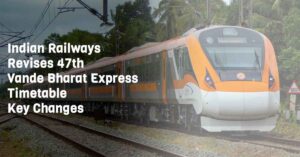
    Indian Railways (IR) has revised the operational timetable for the nation’s 47th Vande Bharat Express, managed by the Northern Railway (NR) division. This cutting-edge, semi-high-speed locomotive, inaugurated by Prime Minister Narendra Modi on March 12, 2024, exemplifies India’s push towards faster, more efficient rail travel.

    Route and Technical Specifics of the 47th Vande Bharat Express

    Manufactured by the Integral Coach Factory in Chennai, this modern marvel traverses the Hazrat Nizamuddin-Khajuraho-Hazrat Nizamuddin route, covering a span of 659 kilometers in approximately 8 hours and 20 minutes, making it the swiftest option for this corridor. The train, designated as 22470/22469, caters to time-conscious travelers seeking speed without compromising comfort.

    Hazrat Nizamuddin-Khajuraho-Hazrat Nizamuddin Vande Bharat Express: Stoppages

    Previously, the train paused at six intermediary stations: Agra Cantonment, Gwalior, V LakshmiBai JHS, Lalitpur Junction, Tikamgarh, and MCS Chhatarpur. However, in a recent update, the national transporter has included Datia railway station as an experimental halt from May 13, pending further evaluation.

    Hazrat Nizamuddin-Khajuraho Vande Bharat Express Time Table, Khajuraho-Hazrat Nizamuddin Vande Bharat Express Train Timings

    Additionally, timing alterations have been introduced for train number 22469 at Gwalior, now scheduled for 19:28 hrs. Meanwhile, train number 22470 will arrive at V LakshmiBai JHS at 10:30 hrs and Tikamgarh at 12:21 hrs, enhancing its operational efficiency.

    Coach Composition

    The Hazrat Nizamuddin-Khajuraho Vande Bharat Express boasts an 8-coach configuration, comprising 7 air-conditioned chair cars and 1 executive AC coach, offering passengers a blend of speed, luxury, and advanced amenities.

    Hazrat Nizamuddin-Khajuraho Vande Bharat Express: Ticket Price

    The fare for this premium service stands at ₹1,665 for the AC Chair Car and ₹3,055 for the Executive AC class, reflecting the high-speed experience it delivers.

    For travelers along this route, the Vande Bharat Express remains a premier choice, merging speed, comfort, and convenience in a single, futuristic package.

  • New Sikkim Rail Line: Melli to Dentam Survey Approved by Railway Ministry

    New Sikkim Rail Line: Melli to Dentam Survey Approved by Railway Ministry

    The Ministry of Railways has granted authorization for the final alignment survey of a proposed rail corridor stretching from Melli to Dentam, traversing the pivotal junctures of Jorethang and Legship within Sikkim, as confirmed in an official communique on Saturday, May 10.

    This comprehensive survey will be executed by the Northeast Frontier Railway, with an allocated budget of ₹2.25 crore, representing a significant stride in bridging the infrastructural void that has historically isolated southern and western Sikkim from the broader national rail matrix, as reported by PTI.

    Spanning approximately 75 kilometers, this prospective route is envisaged as a critical extension of the Sivok-Rangpo railway endeavor, a major infrastructural undertaking currently under construction with an anticipated completion horizon of 2027.

    Strategically situated, Melli is poised to become a pivotal gateway, facilitating seamless integration for this expansion into the national rail tapestry, thereby reinforcing connectivity for the region’s hinterlands.

    The ministry further emphasized that this conclusive location survey is designed to furnish the essential technical framework, delineating precise alignment, engineering parameters, and a comprehensive cost matrix for the undertaking.

    This initiative signifies a pivotal advancement in the ongoing mission to augment rail access within southern and western Sikkim, a move anticipated to substantially uplift the economic prospects of locales such as Gyalshing and its environs. The project aspires to invigorate tourism, enhance logistical efficiency, stimulate commerce, and foster employment generation.

    Preparatory steps for tender issuance concerning these survey works are expected to commence in the near future.

  • Bidar-Nanded Rail Line: ₹2,354 Cr Project Awaits Karnataka’s Green Light

    Bidar-Nanded Rail Line: ₹2,354 Cr Project Awaits Karnataka’s Green Light

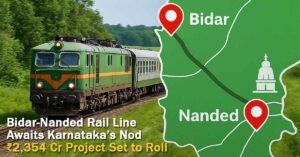
    The Centre is moving swiftly to execute the ₹2,354 crore Bidar-Nanded rail line project, a strategic inter-state initiative designed to boost connectivity between Karnataka and Maharashtra. With Maharashtra already on board, all eyes are now on Karnataka, whose approval remains the final piece before execution can begin.

    This proposed 155-kilometre railway corridor will directly link Bidar in Karnataka with Nanded in Maharashtra—both significant cultural and economic hubs. The project is being hailed as a regional game-changer that will:

    • Improve access to religious sites like Hazur Sahib Gurudwara in Nanded and Bidar Fort.
    • Streamline logistics for local businesses and agriculture.
    • Cut travel time and ease congestion on highways.

    The Ministry of Railways has completed all preliminary surveys and is ready to proceed. Maharashtra has officially agreed to the project and its funding structure. Karnataka, however, is still pending final approval.

    “We’re only waiting for Karnataka’s No Objection Certificate (NOC). Once it’s in, we can move fast,” a senior Railways official stated.

    The project is structured under a cost-sharing model, with the Centre bearing 50% and the two states contributing 25% each.

    Contributor Share Amount (₹ crore)
    Central Government 50% 1,177
    Karnataka Government 25% 588.5
    Maharashtra Government 25% 588.5
    Total 100% 2,354

    An SPV (Special Purpose Vehicle) will be created to manage funding and implementation.

    The line will stimulate growth in backward districts of both states, enhance freight movement, and attract investments in agribusiness and manufacturing.

    Millions of pilgrims travel annually between Bidar and Nanded. This rail line will cut travel time and increase safety for devotees.

    Rail is far more sustainable than road transport. This shift is expected to reduce CO₂ emissions and align with India’s green infrastructure goals.

    Political leaders from both states are vocal about fast-tracking the project. Citizens, especially in border regions, have welcomed the move and called for Karnataka to expedite approval.

    “This isn’t just a railway line—it’s a promise of development, jobs, and easier lives for lakhs of people,” said a local activist from Bidar.

    The project has minimal ecological impact and is expected to clear environmental hurdles quickly. Land acquisition will follow a transparent, compensation-based model to prevent displacement issues.

    This ₹2,354 crore project is ready to go. With the Centre and Maharashtra already aligned, Karnataka’s timely approval is vital for unlocking the full potential of the Bidar-Nanded corridor.

    A simple go-ahead could unleash massive socio-economic benefits across two states, reduce travel hardships, and fast-track regional growth. The nation is ready. Karnataka must decide.

  • Delhi-Mumbai and Delhi-Howrah Rail Corridors Set for 160 kmph Upgrade

    Delhi-Mumbai and Delhi-Howrah Rail Corridors Set for 160 kmph Upgrade

    In a bid to supercharge two of India’s most heavily trafficked rail corridors—Delhi-Mumbai and Delhi-Howrah—the Ministry of Railways has launched a sweeping series of capacity enhancement projects and speed upgrades.

    The Delhi-Mumbai corridor, a 1,386-km arterial lifeline, is undergoing a major overhaul to boost sectional speeds to 160 kmph. The project has already secured sanction and is advancing steadily, Railways Minister Ashwini Vaishnaw confirmed in a written reply to the Lok Sabha.

    Currently, 196 km of the corridor are outfitted with four parallel rail lines. To further bolster throughput, construction of the third and fourth lines is underway on the 64-km stretch between Dahanu Road and Virar. To extend this expansion, surveys have been approved to assess the feasibility of laying third and fourth lines over the remaining 1,126 km.

    Meanwhile, freight movement is also gaining momentum. Of the 1,506-km Western Dedicated Freight Corridor (DFC), a commanding 1,404 km have already been commissioned, with work progressing on the final 102-km leg.

    Simultaneously, the 508-km Mumbai-Ahmedabad High-Speed Rail project continues to move forward, marking India’s foray into bullet train territory.

    Turning to the Delhi-Howrah corridor—spanning 1,450 km—the Railways is implementing similar speed augmentation to push the route to 160 kmph capability.

    This critical stretch is a patchwork of dual, triple, and quadruple lines. At present, 194 km feature four lines, 312 km are triple-lined, while the remaining 944 km operate on double lines.

    Several large-scale capacity augmentation initiatives are already in motion along this corridor. These include multi-tracking the 375-km Son Nagar–Andal section, building a third line on the 18-km Aligarh–Daud Khan stretch, and adding another third track between Mughalsarai and Allahabad, extending 150 km.

    Elsewhere, a fifth line is being laid between Kalipahari and Bakhtarnagar for 18 km, while a fourth line is under construction across a 43-km expanse from Saktigarh to Chandanpur.

    Additionally, the Nimcha up avoiding line is being lengthened by 9.42 km to ease congestion.

    Further expansion surveys have received the green light, covering the potential addition of 480 km of third lines, 96 km of fourth lines, and 151 km of fifth lines.

    On the freight side, the entire 1,337-km Eastern Dedicated Freight Corridor has already been commissioned, bringing a significant boost to cargo transport capacity along the eastern flank of the national rail network.