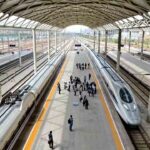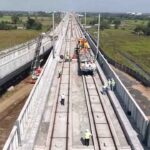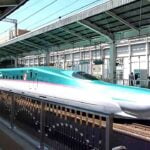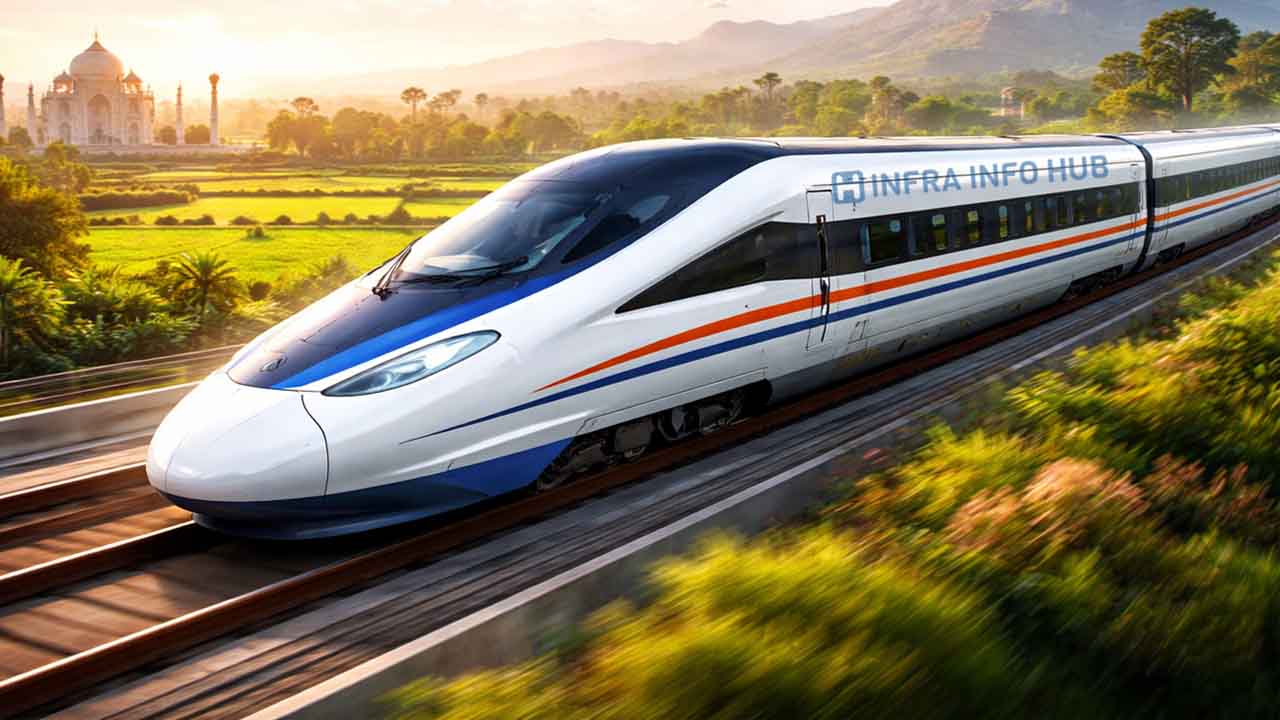
In a major push to modernise the country’s transport backbone, Finance Minister Nirmala Sitharaman has announced plans to develop seven new high-speed rail corridors in the Union Budget 2026–27. The proposal signals a decisive step toward building a faster, more integrated railway network across India, connecting major economic centres with cutting-edge mobility infrastructure.
The newly proposed high-speed corridors are:
- Mumbai–Pune
- Pune–Hyderabad
- Hyderabad–Bengaluru
- Hyderabad–Chennai
- Chennai–Bengaluru
- Delhi–Varanasi
- Varanasi–Siliguri
Together, these routes form two powerful clusters. In the south, the Mumbai–Pune–Hyderabad–Bengaluru–Chennai network creates a high-speed “quadrilateral” linking four major metropolitan economies. This region is already home to some of the country’s strongest IT, manufacturing, automotive, and startup ecosystems. Faster rail connectivity is expected to deepen business integration, reduce logistics costs, and support regional growth.
In the north and east, the Delhi–Varanasi–Siliguri corridor extends high-speed rail toward eastern and northeastern India. This stretch has long been constrained by slow and congested rail routes. A faster alternative could significantly improve access to religious tourism hubs, emerging industrial zones, and border trade regions.
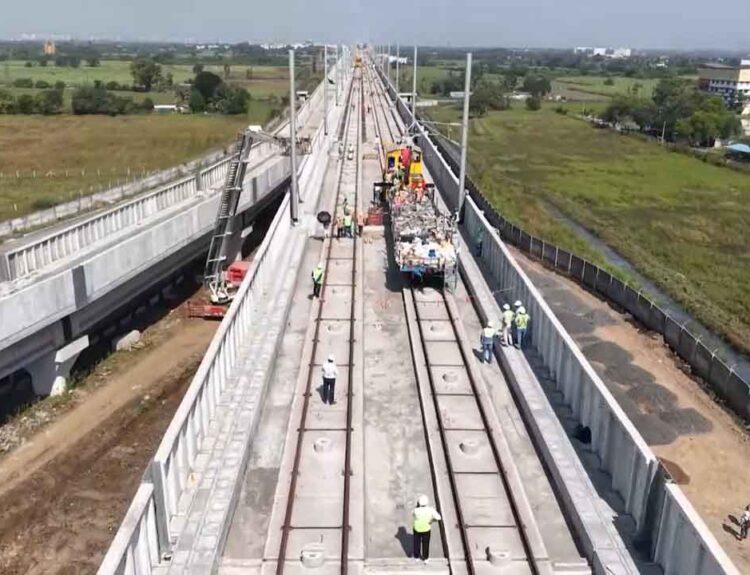
These new corridors are designed to operate in the semi-high-speed to full high-speed range, drawing from India’s experience with the Mumbai–Ahmedabad bullet train project. That flagship project has crossed more than 55 per cent completion and is expected to become operational by 2028–29.
Officials believe the technical expertise, land acquisition frameworks, and safety systems developed during this project will now serve as a foundation for future corridors. According to sources within the Ministry of Railways, the government aims to standardise design, signalling, and rolling stock across multiple routes to reduce long-term costs.
For passengers, the impact could be transformative. Travel times between major cities are expected to shrink dramatically. Journeys that currently take six to eight hours could be reduced to under three, making same-day business travel more practical and reducing dependence on short-haul flights.
High-speed rail also promises greater comfort, reliability, and punctuality. With dedicated tracks, advanced signalling, and limited crossings, these corridors are likely to offer smoother and safer journeys compared to conventional rail routes.
In corridors like Mumbai–Pune or Chennai–Bengaluru, where highways are frequently congested, fast trains could become the preferred mode of daily and weekly travel for professionals and students.
Beyond convenience, the corridors are expected to act as growth engines. Stations along high-speed routes often become hubs for commercial development, real estate, hospitality, and logistics. Industrial parks, technology clusters, and tourism zones are likely to emerge around key nodes.
The southern quadrilateral, in particular, could strengthen supply chains between ports, factories, and technology centres. Meanwhile, the Delhi–Siliguri stretch may unlock new opportunities for eastern states by improving market access and investor confidence.
While the announcement has generated excitement, detailed planning is still underway. The government has indicated that comprehensive feasibility studies, environmental assessments, and route surveys will be conducted in the coming months.
Funding models are expected to combine public investment, multilateral loans, and potential public-private partnerships. Officials are also exploring value-capture mechanisms, such as station-area development, to support long-term financing.
Project timelines, construction phases, and operational targets will be shared through future updates from the Railway Ministry.
The seven proposed corridors reflect India’s broader ambition to shift toward faster, cleaner, and more efficient transportation systems. As urbanisation accelerates and intercity travel demand grows, high-speed rail is emerging as a strategic alternative to congested roads and crowded airports.
If executed on schedule and within budget, this new network could mark the beginning of a new era in Indian rail travel—one defined by speed, connectivity, and economic integration.